Clean water is not only a utility issue. It is a public health issue, an environmental issue, an infrastructure issue, and a long-term development issue.
When wastewater is not treated properly, it does not disappear. It moves into drains, rivers, ponds, lakes, groundwater, coastal areas, soil, and eventually human communities. Poor wastewater treatment can damage aquatic ecosystems, contaminate water sources, increase disease risk, create odor problems, reduce the quality of public spaces, and weaken the long-term environmental health of a city or community.
One important Japanese solution is the Johkasou system, often described internationally as a Japanese septic tank system. A Johkasou is not simply a holding tank. It is a decentralized domestic wastewater treatment system designed to treat wastewater close to where it is generated.
For cities, municipalities, facilities, schools, commercial sites, rural communities, resorts, and areas where centralized sewer access is limited or slow to build, the Johkasou model offers a practical approach: local wastewater treatment supported by design, maintenance, inspection, and proper operation.
The Problem: Untreated Wastewater Slowly Damages the Environment
Wastewater from homes, buildings, schools, factories, hotels, and commercial spaces can contain organic waste, pathogens, oils, grease, detergents, nutrients, and suspended solids.
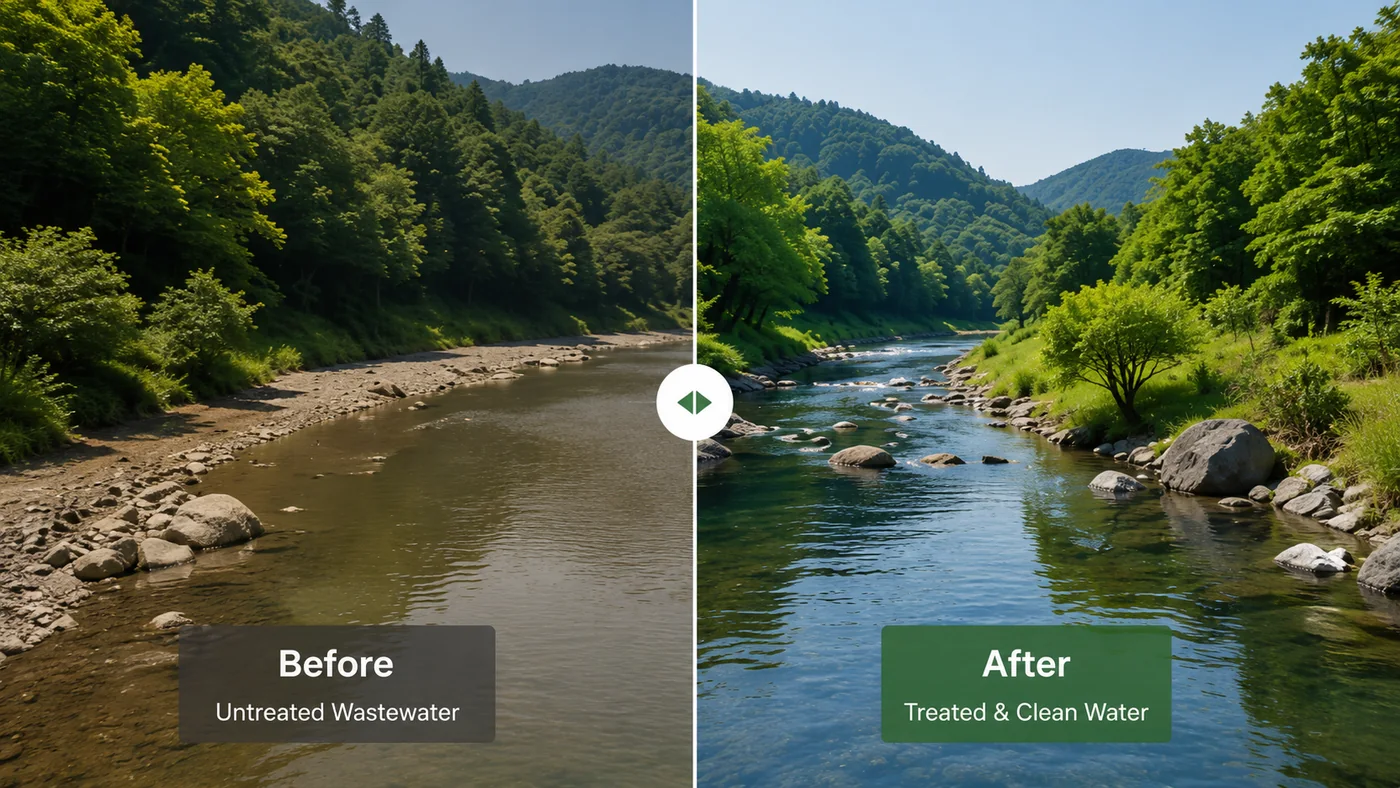
If this wastewater enters the environment without proper treatment, it can cause:
- polluted canals, drains, rivers, and ponds
- bad odor around residential and commercial areas
- unsafe groundwater near wells or sensitive sites
- higher risk of waterborne disease
- algae growth caused by excess nutrients
- reduced oxygen in water bodies
- stress or death of aquatic life
- lower quality of life for nearby communities
This is why wastewater infrastructure should never be treated as an afterthought. A clean city or clean community requires clean wastewater planning.
What Is a Japanese Septic Tank / Johkasou System?
A Johkasou is a compact wastewater treatment system installed close to the source of wastewater.
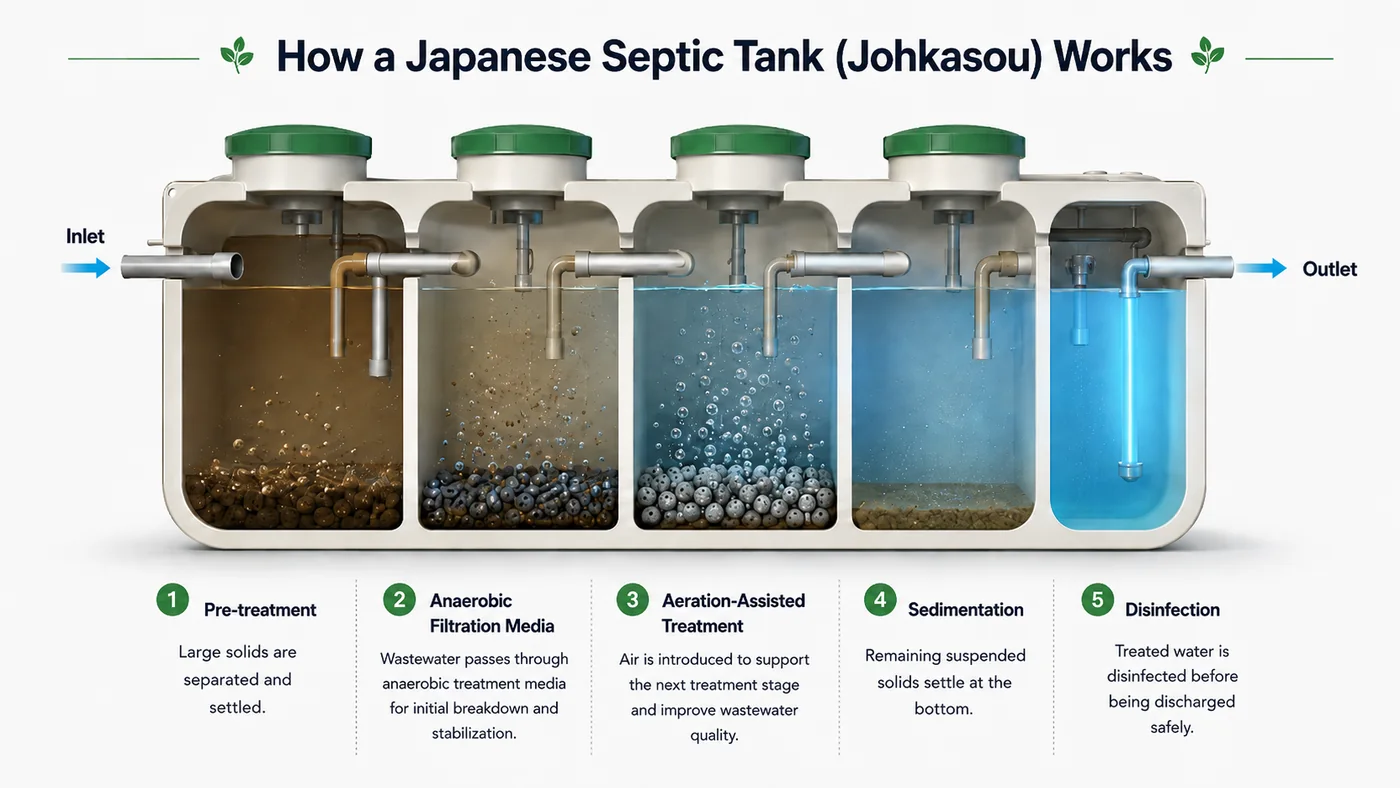
Instead of sending all wastewater through a long sewer network to a distant treatment plant, a Johkasou treats wastewater locally. Depending on the design, the system can include physical separation, anaerobic treatment media, aeration-assisted treatment, sedimentation, disinfection, sludge storage, and in some cases advanced treatment for nutrients.
In simple terms, the process works like this:
- Wastewater enters the system from toilets, kitchens, baths, washbasins, and laundry areas.
- Large solids are separated.
- Anaerobic treatment media supports the breakdown and stabilization of wastewater.
- Aeration-assisted treatment further supports wastewater stabilization before clarification.
- Remaining particles settle.
- Disinfection may be applied where required.
- Treated effluent is discharged according to local rules and site conditions.
The key point is simple: a Johkasou is not only a tank. It is a treatment system.
Why Johkasou Matters for Clean Water
Johkasou systems are important because they treat wastewater before it reaches the surrounding environment.
This helps reduce organic pollution, odor, suspended solids, pathogens, and other wastewater-related risks. In areas where untreated domestic wastewater would otherwise flow into drains, canals, rivers, or groundwater, decentralized treatment can make a major difference.
A well-planned Johkasou system helps protect:
- local rivers and canals
- groundwater
- ponds and lakes
- coastal areas
- community drainage systems
- nearby homes and public spaces
- long-term water quality
Cleaner wastewater discharge creates cleaner surroundings. Cleaner surroundings support healthier communities.
Why Basic Septic Tanks Are Not Enough
Many people confuse Johkasou with ordinary septic tanks. That is a mistake.
A basic septic tank mainly separates solids, oils, and scum. It does not necessarily provide the same level of multi-stage wastewater treatment as a Johkasou system. If a basic septic system is poorly designed, overloaded, poorly maintained, or installed in the wrong location, it can leak, smell, fail, or contaminate nearby water sources.
Johkasou systems are designed as more complete treatment units. They use media-based treatment processes and controlled treatment stages to improve wastewater quality before discharge.
The goal is not simply to store wastewater. The goal is to treat it.
Why Centralized Sewerage Is Not Always the Best Option Everywhere
Centralized sewer systems are important in dense urban areas. But they are not always the fastest, most affordable, or most practical option for every location.
A centralized sewer network requires long pipe systems, pumping stations, land, major construction, technical operators, energy, and long-term maintenance budgets. In spread-out communities, rural areas, mountain areas, islands, small facilities, and new developments, centralized sewer expansion can be expensive and slow.
Johkasou systems can be useful where:
- sewer access is unavailable
- sewer expansion would take too long
- the area is not densely populated
- the site needs independent wastewater treatment
- the project requires faster environmental improvement
- long pipe networks are not practical
- a hybrid wastewater strategy is more realistic
The strongest wastewater strategy is not centralized only or decentralized only. The strongest strategy is choosing the right system for the location.
Where Japanese Septic Tank Systems Can Be Useful
Johkasou-style planning can support different site types when system sizing, discharge rules, maintenance responsibilities, and local conditions are handled correctly.
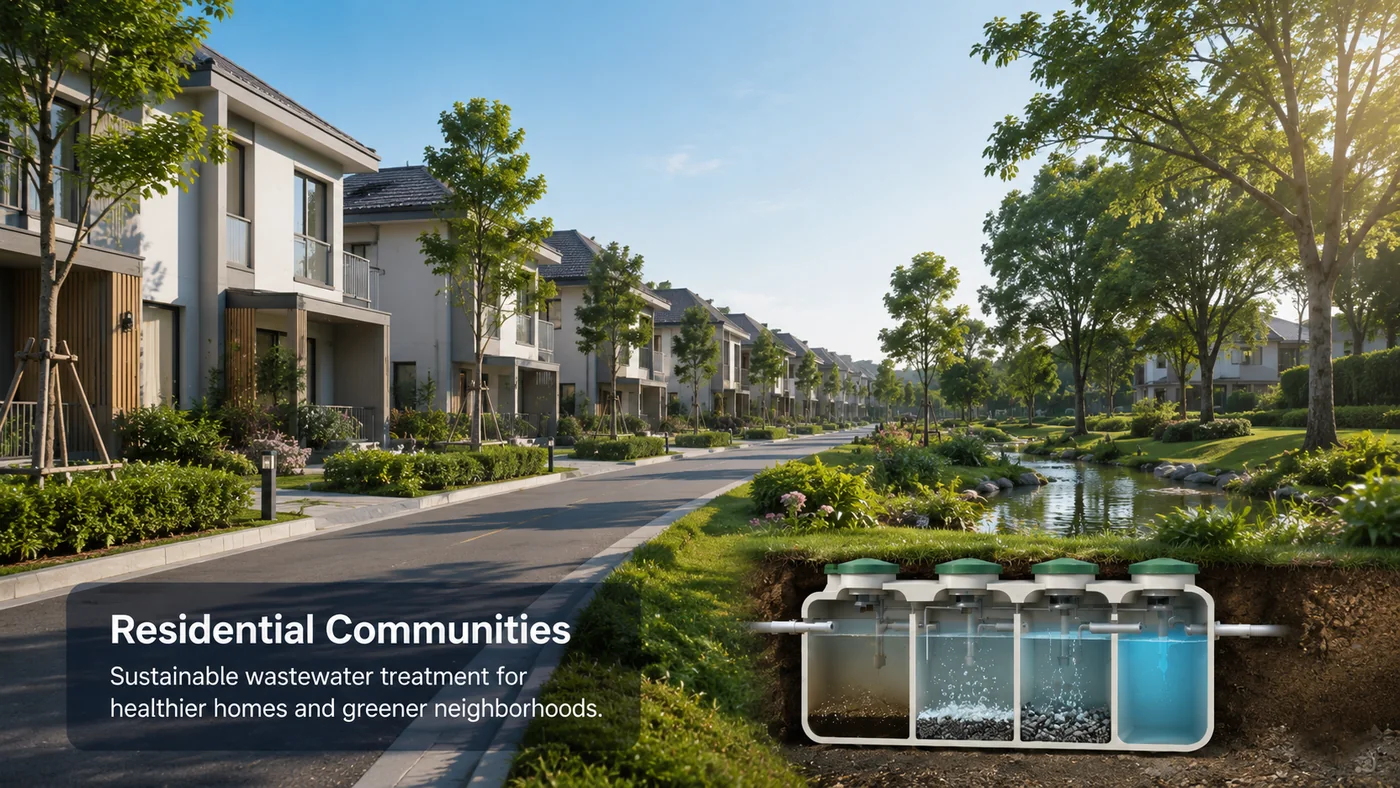
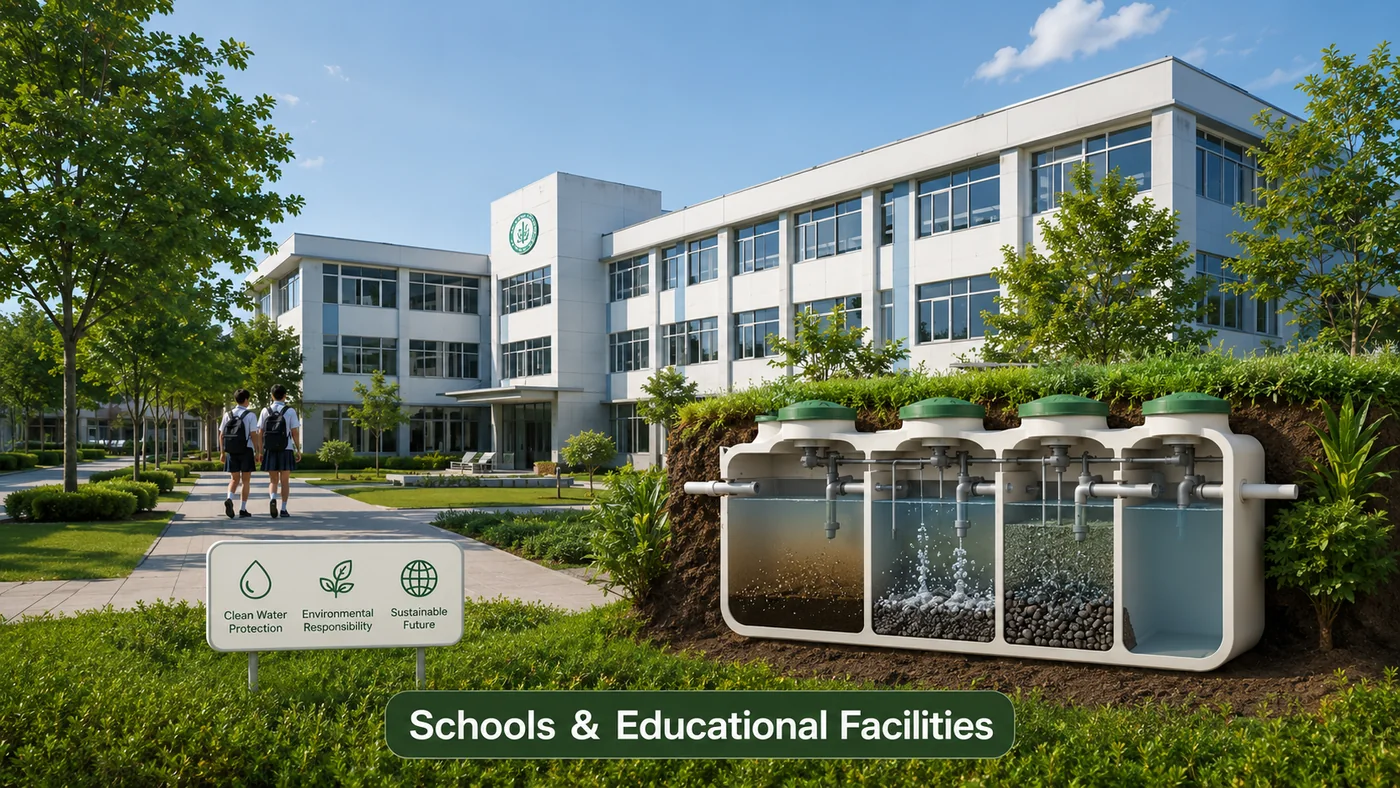

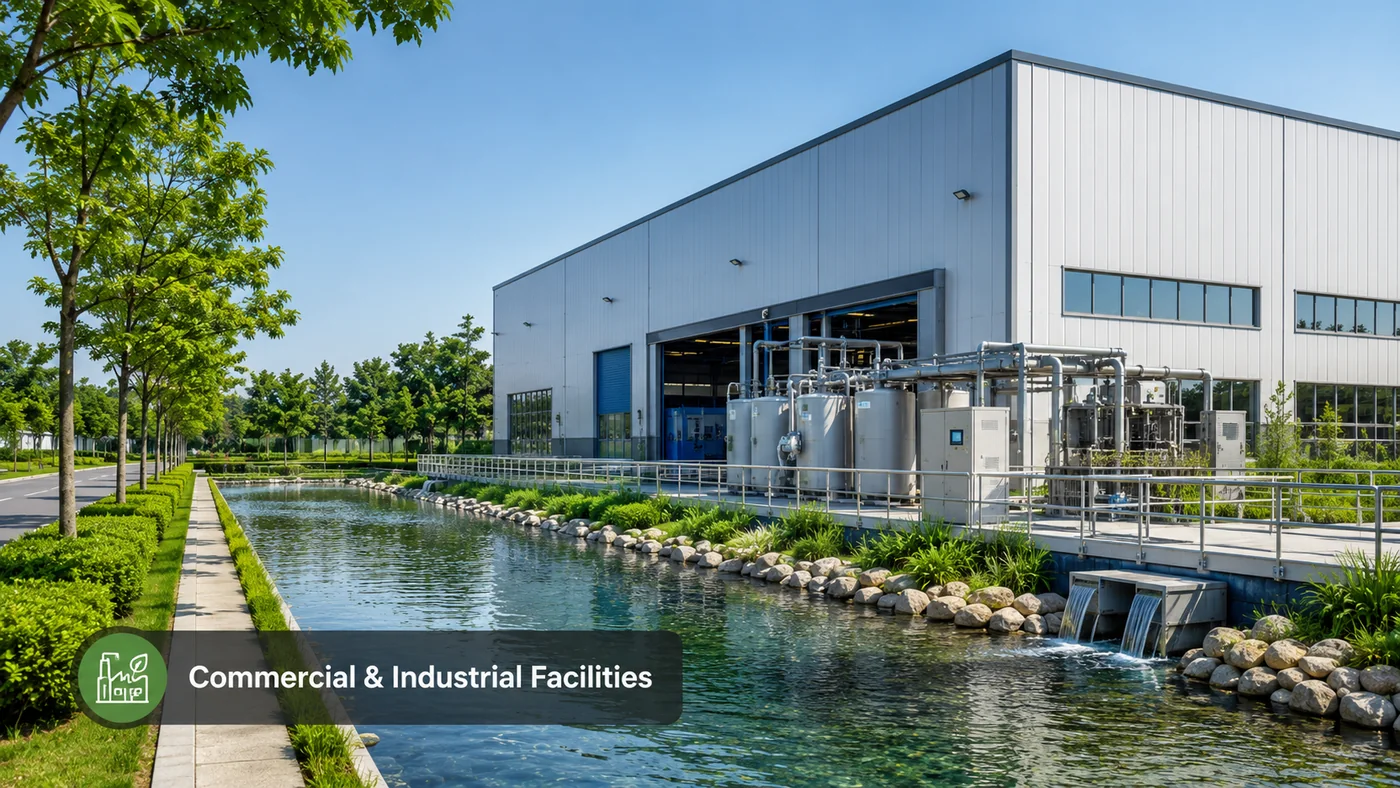
Rural and remote areas can also be reviewed when full sewer infrastructure is not practical or immediately available.
Environmental Benefits of Japanese Septic Tank Systems
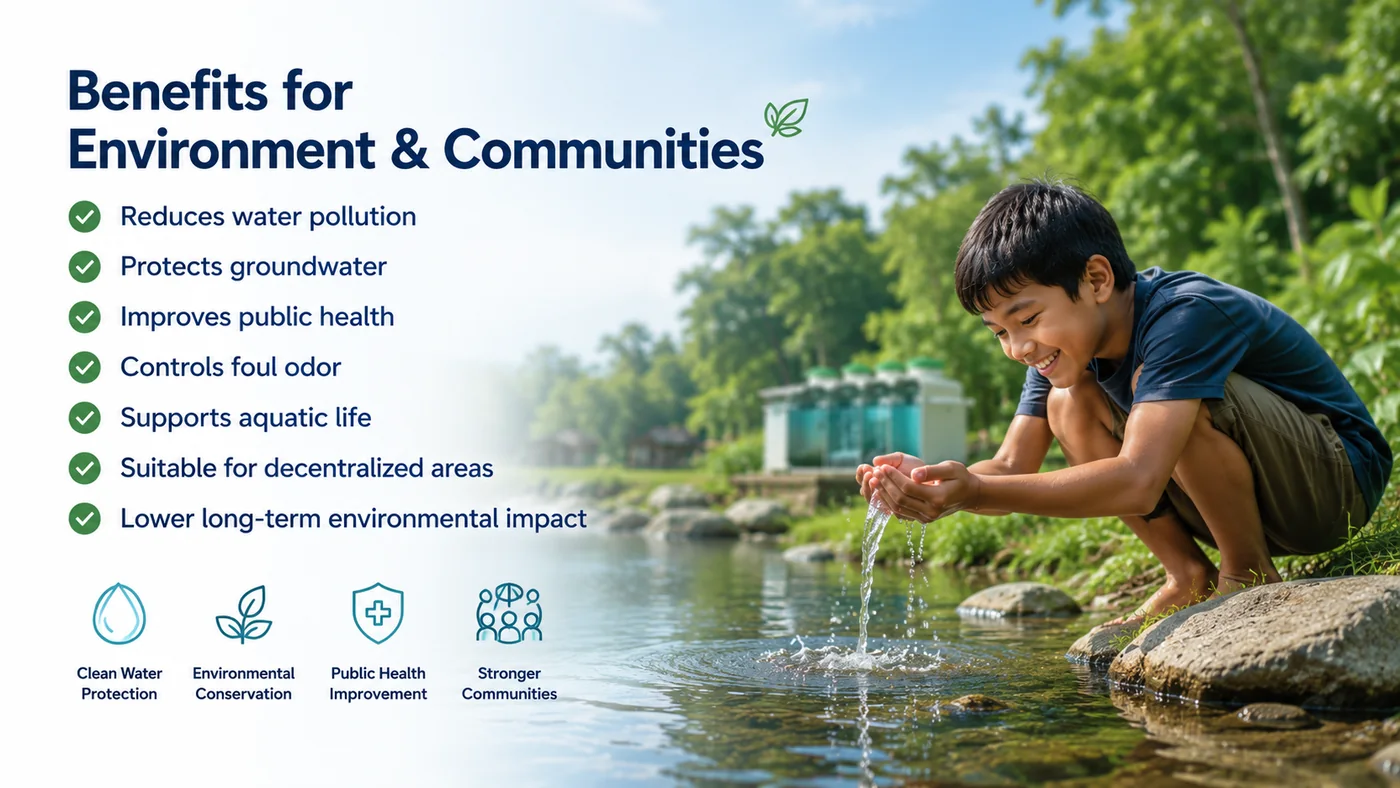
Cleaner local water bodies
When wastewater is treated before discharge, less pollution enters nearby rivers, canals, ponds, lakes, and coastal areas. This helps reduce odor, sludge buildup, dirty water flow, and ecosystem stress.
Lower organic pollution
Johkasou systems help reduce organic pollution in wastewater. This matters because high organic pollution consumes oxygen in water. When oxygen levels fall, fish and aquatic life suffer.
Reduced nutrient-related damage
Wastewater can contain nitrogen and phosphorus. When too much of these nutrients enter water bodies, algae can grow excessively. This can reduce oxygen, damage aquatic ecosystems, create odor, and affect the appearance and usability of public water spaces.
Some Johkasou systems can include nitrogen and/or phosphorus removal depending on the treatment requirement.
Better groundwater protection
Poorly managed wastewater can contaminate groundwater. This is especially serious near wells, residential areas, schools, farms, and sensitive land. A properly designed and maintained Johkasou system can reduce contamination risk.
Improved local environmental hygiene
Cleaner wastewater handling reduces dirty drains, unpleasant smells, stagnant wastewater, and visible pollution. This improves the living environment around homes, schools, businesses, and public facilities.
Practical decentralized infrastructure
Johkasou systems can often be installed close to the source of wastewater. This makes them useful for facilities and communities that need proper treatment but cannot wait for large sewer projects.
Health Benefits of Better Wastewater Treatment
Public health and wastewater treatment are closely connected.
Poor sanitation and untreated wastewater can expose people to pathogens and contaminated water. This can increase the risk of waterborne disease and create unsafe living conditions.
Proper wastewater treatment helps reduce exposure to human waste, contaminated water, and polluted drainage systems.
For communities, this can support:
- cleaner neighborhoods
- lower disease risk
- safer public spaces
- better sanitation conditions
- reduced odor
- improved dignity and comfort
- stronger long-term health protection
Clean water infrastructure is not only engineering. It is public health protection.
What a City or Community Can Look Like Over Time
A wastewater system does not transform an area overnight. But with serious planning, proper installation, regular maintenance, and responsible operation, the change can become visible over time.
In the early stage, selected facilities, pilot areas, schools, commercial sites, or communities can begin treating wastewater more safely.
Over several years, more areas can move away from untreated discharge. Local drains and canals can become cleaner. Odor problems can reduce. Municipal teams and private operators can gain practical maintenance experience.
Over the long term, a city or region can develop a more flexible wastewater infrastructure model. Dense urban areas may use sewerage systems, while rural areas, facilities, and communities outside sewer coverage use decentralized treatment.
The result is not just cleaner tanks. The result is cleaner water, healthier communities, stronger infrastructure planning, and better environmental discipline.
Maintenance Is Non-Negotiable
This is the part many wastewater projects get wrong.
Installing a system is not enough. A Johkasou system must be properly designed, installed, operated, inspected, maintained, and desludged.
A strong implementation needs:
- proper system sizing
- site assessment
- correct installation
- regular maintenance
- sludge removal
- water quality checks
- trained operators or maintenance partners
- clear responsibility for operation
- local compliance planning
- documentation and inspection procedures
If a system is installed but not maintained, performance will decline. That can lead to odor, poor effluent quality, system failure, and environmental contamination.
Technology matters. But the management system matters just as much.
How Axton Group LTD Japan Can Help
Axton Group LTD Japan supports environmental engineering and Japanese septic system planning by helping clients move from unclear wastewater problems to practical implementation planning.
We do not treat Johkasou as a product that can simply be dropped into any location. The right approach depends on site conditions, wastewater volume, local regulations, discharge standards, soil and water conditions, maintenance capacity, budget, and implementation partners.
Site and water problem review
We help review the facility, community, or development area to understand the wastewater source, usage pattern, environmental risk, and project constraints.
Wastewater and purification requirement mapping
We help clarify what type of wastewater needs treatment, what water-quality outcome is required, and what local discharge or reuse expectations must be considered.
Japanese septic / Johkasou concept planning
We help explain how Japanese Johkasou-inspired concepts may fit the project context and where they may not fit.
System design and local adaptation support
We help adapt the treatment concept to local climate, utilities, authority requirements, site limitations, and implementation realities.
Technical coordination and partner support
We help coordinate between project owners, local authorities, technical supervisors, environmental consultants, installation partners, and maintenance stakeholders.
Compliance, maintenance, and improvement planning
We help structure documentation, maintenance planning, inspection expectations, sludge-handling considerations, and future improvement steps.
City-level and large-scale planning discussion
For larger projects, Axton Group can support environmental planning discussions around decentralized wastewater treatment, water purification, and Japanese septic system concepts, depending on project scope, regulations, technical requirements, and local partners.
Planning a wastewater treatment project?
Axton Group can support early-stage review, site requirement mapping, Johkasou-inspired system planning, implementation coordination, and documentation for city-level, community-level, facility-level, or country-level environmental projects.
Discuss an Environmental ProjectConclusion
Japanese septic tank systems matter because they solve a serious problem: how to treat domestic wastewater safely, locally, and practically where centralized sewerage is not the right or immediate answer.
But the lesson from Japan is not only the tank. The lesson is the system behind the tank: design, regulation, maintenance, inspection, desludging, technical responsibility, and long-term environmental discipline.
For cities, facilities, municipalities, and communities that want cleaner water, healthier surroundings, and stronger environmental protection, decentralized wastewater treatment should be part of the infrastructure conversation.
A well-planned Johkasou system can help protect water, reduce pollution, improve sanitation, support public health, and create a cleaner future.
Axton Group LTD Japan helps clients explore how Japanese environmental engineering concepts can be adapted into practical wastewater and water purification projects for facilities, communities, city-level needs, and larger environmental planning.