Site and Water Problem Review
We review the facility, water issue, wastewater source, usage patterns, and known site constraints.
Service
Axton Group supports environmental engineering projects involving Japanese septic tank systems, Johkasou-inspired wastewater treatment, decentralized wastewater treatment technology, water purification, and site-adapted compliance planning. Axton Group can support environmental engineering discussions from individual facilities and communities to city-level and country-level wastewater and water purification planning, depending on site conditions, regulations, discharge requirements, and local partners.
Japanese Standards
Axton Group's environmental projects are designed with reference to Japanese Johkasou concepts and JIS-related practices. Technical supervision and final specifications depend on project location, local regulations, and confirmed engineering requirements.
Technical supervision may include certified Waste Treatment Facility Technical Managers where applicable.
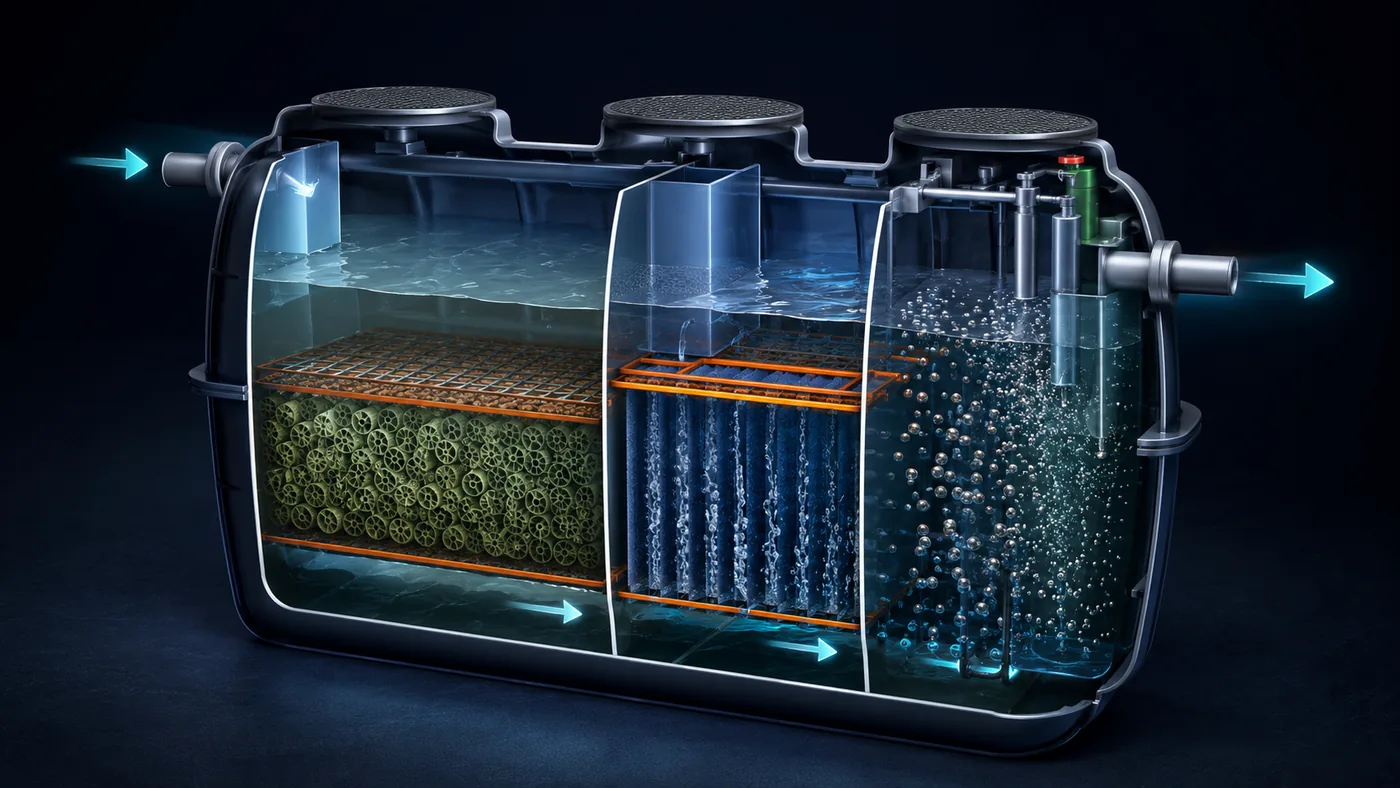
Treatment Process
Wastewater treatment performance depends on system design, operating conditions, maintenance, and local discharge requirements.
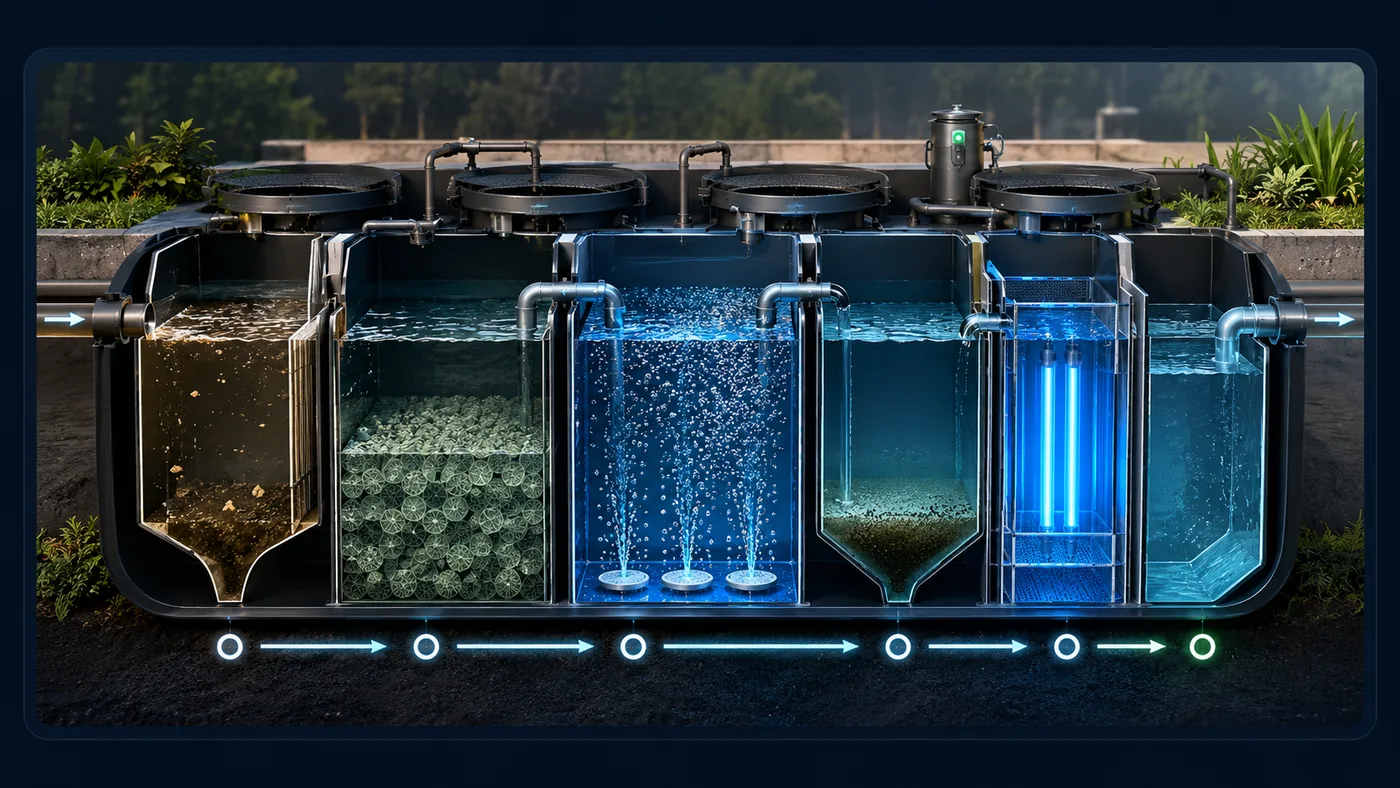
| Stage | Description | Treatment | Key benefit |
|---|---|---|---|
| Primary Chamber | Solids settle and oils float; clarified liquid proceeds to multi-stage treatment media. | Physical separation | Prevents clogging and prepares wastewater for multi-stage treatment. |
| Anaerobic Chamber | Anaerobic treatment media supports the breakdown and stabilization of wastewater without oxygen. | Anaerobic treatment media | Reduces sludge and odor. |
| Aerobic Chamber | Aeration-assisted treatment supports further wastewater stabilization before clarification. | Aeration-assisted treatment | Core treatment stage, with pollutant reduction depending on system design and conditions. |
| Sedimentation | Fine particles settle and clearer water rises. | Physical | Improves effluent clarity. |
| Disinfection | UV, chlorine, or approved local disinfection methods may be used when required. | Chemical / UV | Supports effluent quality control where required by regulations. |
| Effluent Outlet | Treated water is discharged or reused only according to local rules and project specifications. | Compliance stage | Supports compliant discharge or reuse. |
Johkasou-style systems use a compact, multi-stage treatment process. Wastewater passes through separation, anaerobic treatment media, aeration-assisted treatment, clarification, and final disinfection or polishing stages before approved discharge or reuse planning. Final system design, treatment performance, and discharge/reuse permissions depend on local regulations and site conditions.
Workflow
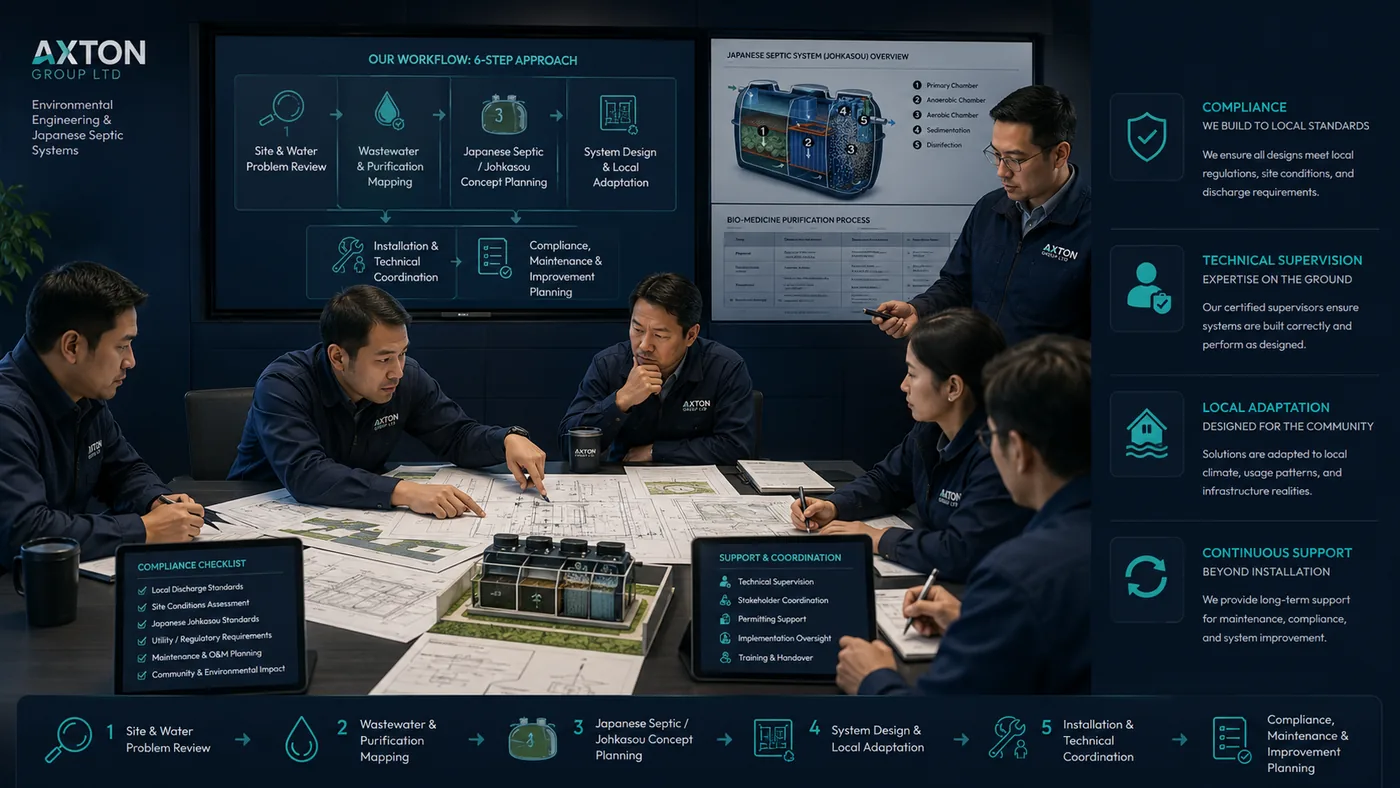
A cautious workflow for wastewater treatment, septic concept planning, and local adaptation.
We review the facility, water issue, wastewater source, usage patterns, and known site constraints.
We map treatment goals, discharge expectations, maintenance needs, and available project information.
We explain relevant Johkasou-inspired concepts and identify which ideas may fit the project context.
We adapt the treatment concept to local climate, utilities, regulations, and authority requirements.
We support coordination between project stakeholders, technical supervisors, and implementation partners where applicable.
We document compliance considerations, maintenance planning, and future improvement needs.
Benefits
Anaerobic treatment media and controlled treatment stages can support sludge management depending on system design.
Balanced anaerobic/aerobic stages help reduce unpleasant odors.
Multi-stage wastewater treatment can reduce pollutants when properly designed and maintained.
Treated water may be suitable for irrigation or safe discharge only where local rules allow.
Compliance
Environmental projects must be adapted to local law, site conditions, discharge standards, and maintenance requirements. Axton Group's role is to connect Japanese environmental system concepts with practical implementation for each market. Axton Group can support environmental engineering discussions from individual facilities and communities to city-level and country-level wastewater and water purification planning, depending on site conditions, regulations, discharge requirements, and local partners.
Who We Serve
Residential complexes
Schools & universities
Commercial buildings
Light industrial facilities
Community facilities
Rural or decentralized wastewater needs
FAQ
Answers are written conservatively so performance and compliance claims depend on confirmed project details.
Japanese Johkasou-inspired septic systems are compact wastewater treatment concepts that use staged separation, anaerobic treatment media, aeration-assisted treatment, clarification, and final disinfection or polishing before compliant discharge or reuse where local rules allow.
A Johkasou-style treatment process uses separation, anaerobic treatment media, aeration-assisted treatment, clarification, and final polishing stages. Final treatment performance depends on system design, maintenance, site conditions, and local requirements.
No. Treated water may be reused or discharged only when local regulations, project specifications, and approved treatment performance allow it.
Axton Group reviews site conditions, local law, discharge standards, maintenance needs, and confirmed engineering requirements before recommending a practical implementation path.
Share the site, wastewater challenge, treatment goals, and location requirements. Our team will review the inquiry and contact you shortly.
Discuss an Environmental Project