
Introduction: Wastewater Compliance Is Becoming a Building-Approval Issue in Dhaka
Bangladesh STP rules 2025 discussions have become more specific because the Dhaka Metropolitan Building Construction Rules 2025 now connect wastewater planning with building approval, construction approval, service drawings, utility-space planning, rainwater harvesting and groundwater recharge, and wastewater discharge compliance.
For Dhaka/RAJUK-area developers, STP planning is no longer only an environmental engineering afterthought. It can affect land-use strategy, site layout, basement planning, parking, MEP coordination, water reuse planning, and long-term operation.
This article focuses on the confirmed STP rule for Dhaka/RAJUK-area buildings, the Dhaka WASA sewerage network exception, STP drawings, STP design calculation expectations, FAR-related service-space treatment, rainwater recharge, and the practical risks of late wastewater planning.
It also explains where Japanese Johkasou wastewater treatment systems for Bangladesh STP projects may fit, and why any equipment proposal must still be coordinated with RAJUK’s STP guideline, local listed professionals, and the approving authority.
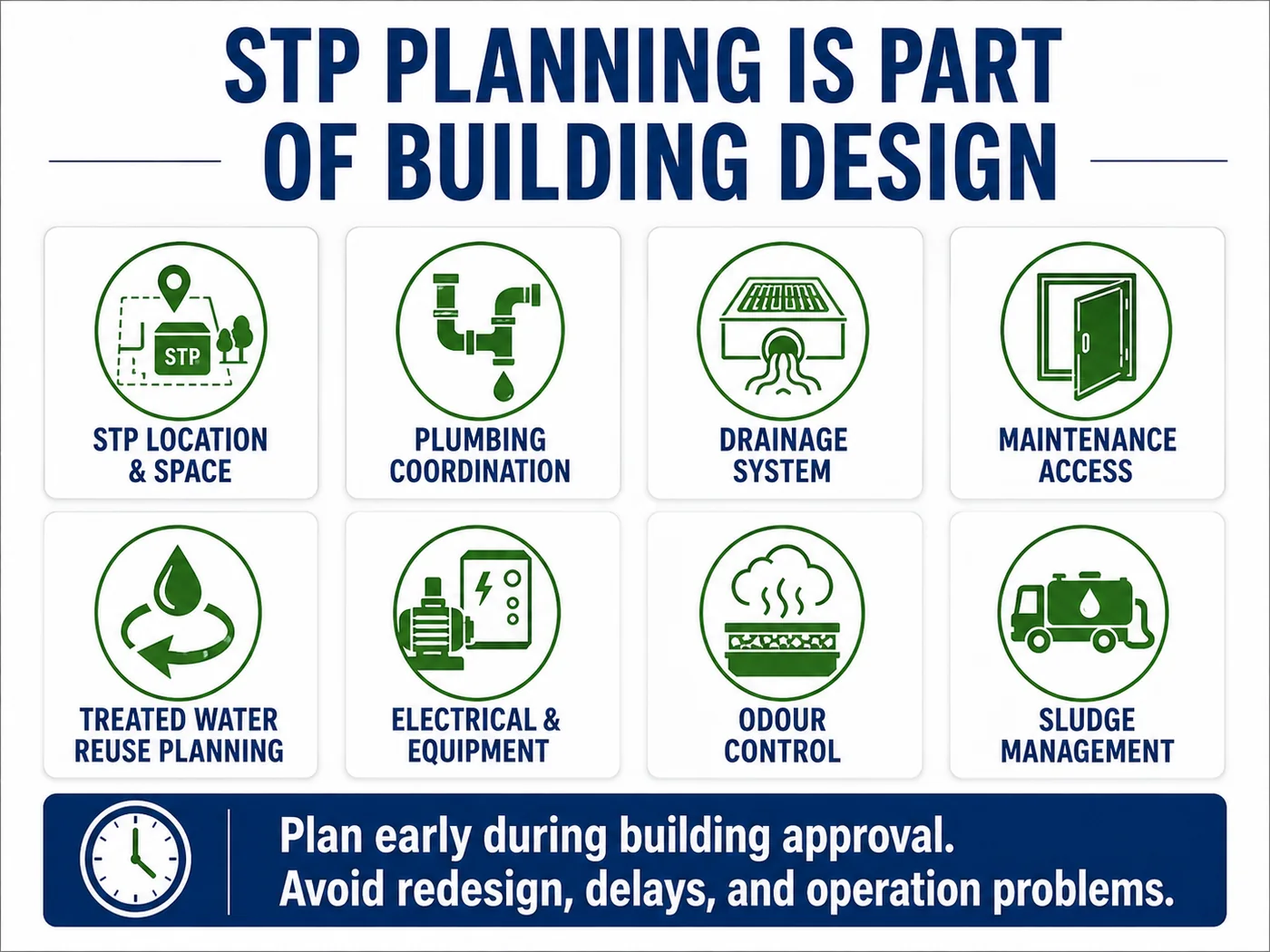
Confirmed 2025 STP Rule for Dhaka / RAJUK-Area Buildings
Under the Dhaka Metropolitan Building Construction Rules, 2025, buildings on land of 5 katha or more must make effective STP-related arrangements according to RAJUK’s STP guideline during construction approval. Existing buildings are also required to install STP within the stated timeline, with possible extension by the authority. However, buildings connected to the Dhaka WASA sewerage management network are exempt from STP installation under this rule.
Source: Bangladesh Gazette, Dhaka Metropolitan Building Construction Rules, 2025, p. 10898.
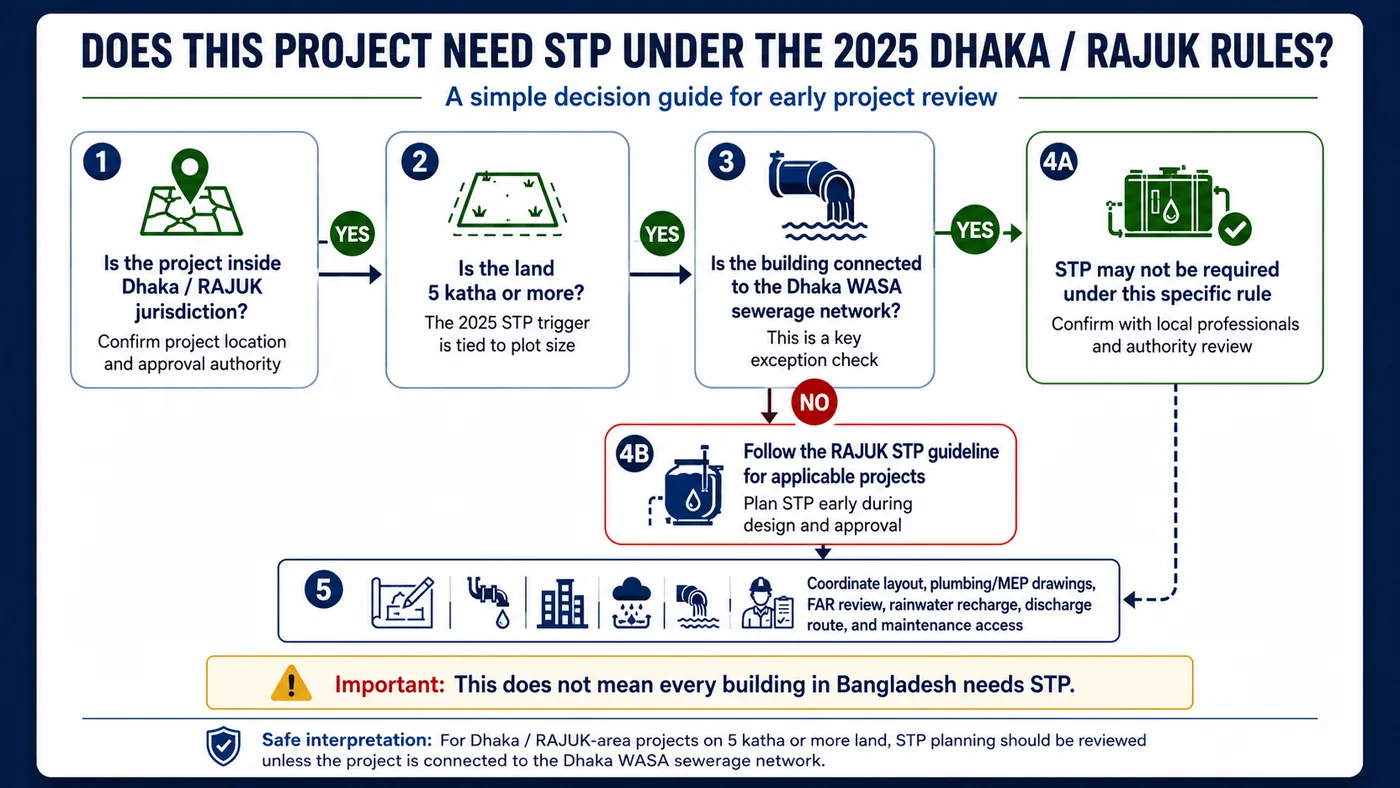
Key Confirmed Rules from the 2025 Gazette
| Topic | Confirmed Rule | Source |
|---|---|---|
| 5-katha STP trigger | Buildings on 5 katha or more land must follow RAJUK STP guideline during construction approval | p. 10898 |
| Existing buildings | Existing buildings must install STP within 1 year, extendable by up to 1 additional year | p. 10898 |
| Dhaka WASA exception | Buildings connected to Dhaka WASA sewerage network do not need STP | p. 10898 |
| STP layout requirement | Where STP applies, layout drawings must show STP, septic tank, and soak pit locations | p. 10890 |
| STP design documentation | STP plumbing drawings and design calculations may be required where applicable | p. 10829–10830 |
| FAR treatment | Qualifying STP, ETP, WTP and service areas may be excluded from FAR under conditions | p. 10868 |
| Rainwater recharge | Rainwater harvesting and groundwater recharge are required building infrastructure | p. 10878 |
| Discharge caution | Waste cannot be directly dumped into canals, rivers, waterbodies, or natural drainage channels | p. 10891 |
What the 5-Katha STP Rule Does Not Mean
The 2025 rule is important, but it should not be exaggerated.
It does not mean:
- every building in Bangladesh needs STP;
- every 5-katha site automatically needs Johkasou;
- Johkasou is automatically approved by RAJUK;
- STP space is always FAR-exempt;
- treated wastewater can be discharged into canals, rivers, ponds, or recharge pits;
- industrial, chemical, healthcare, or hazardous wastewater can be treated like normal domestic sewage.
The safe interpretation is:
For Dhaka/RAJUK-area buildings on land of 5 katha or more, STP planning must follow RAJUK’s STP-related guideline during construction approval, unless the building is connected to the Dhaka WASA sewerage management network.
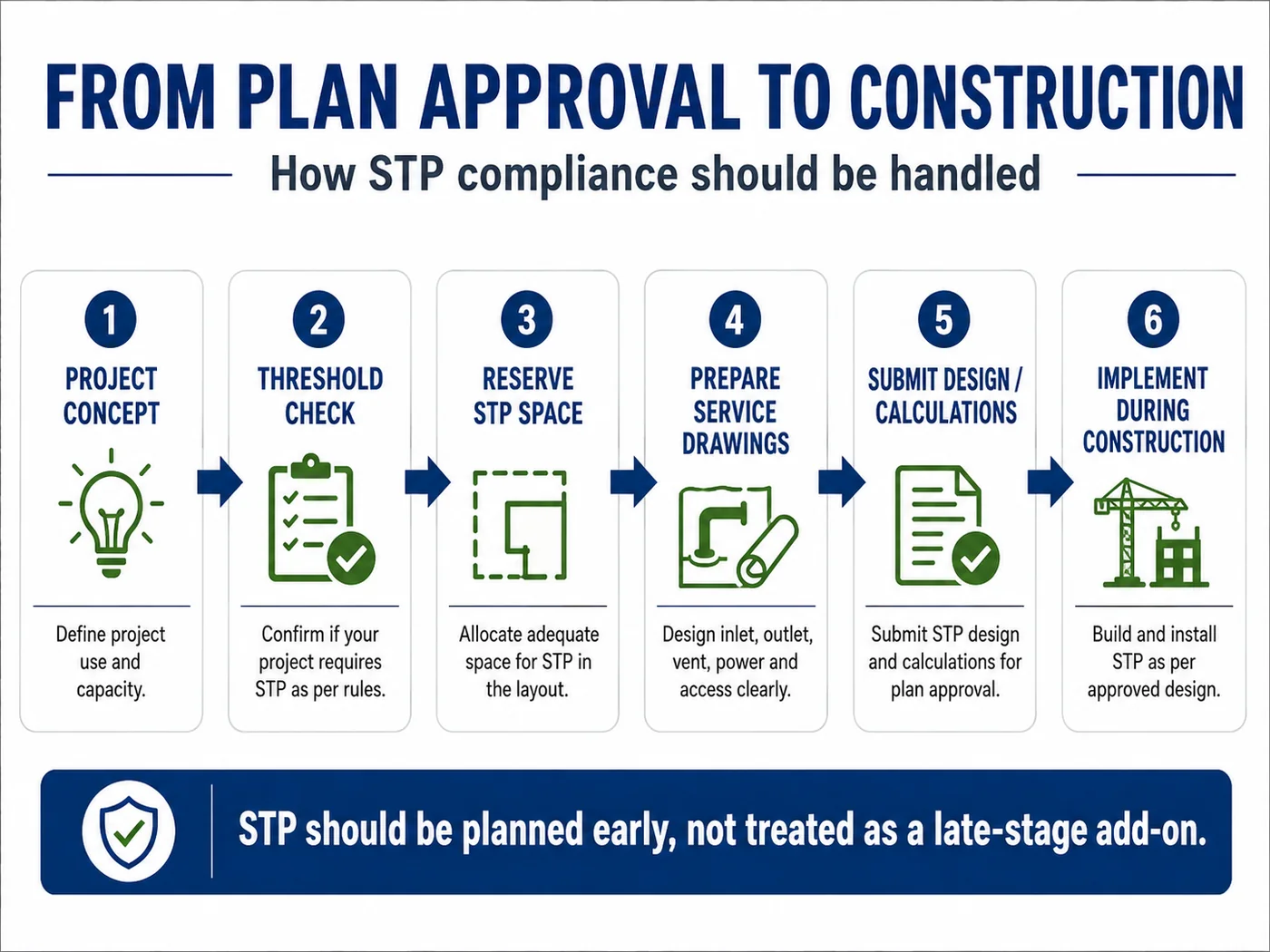
Why STP Must Be Planned Before Approval
The 2025 rules make STP a drawing and approval issue, not just an equipment issue. Where STP applies, project layouts should identify the STP, septic tank, soak pit, and wastewater-disposal arrangements. STP plumbing drawings and design calculation reports may also be required where applicable.
Sources: Bangladesh Gazette, p. 10890 and p. 10829–10830.
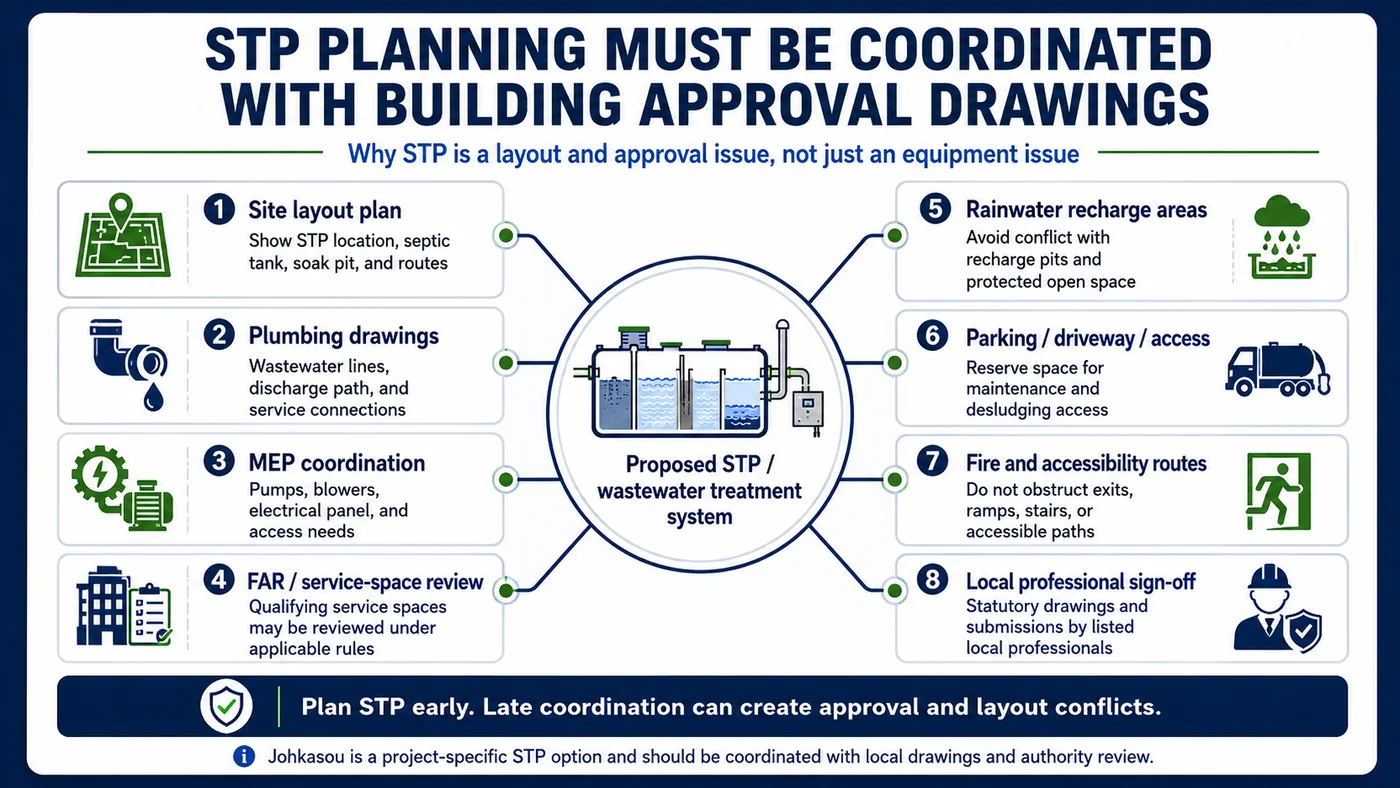
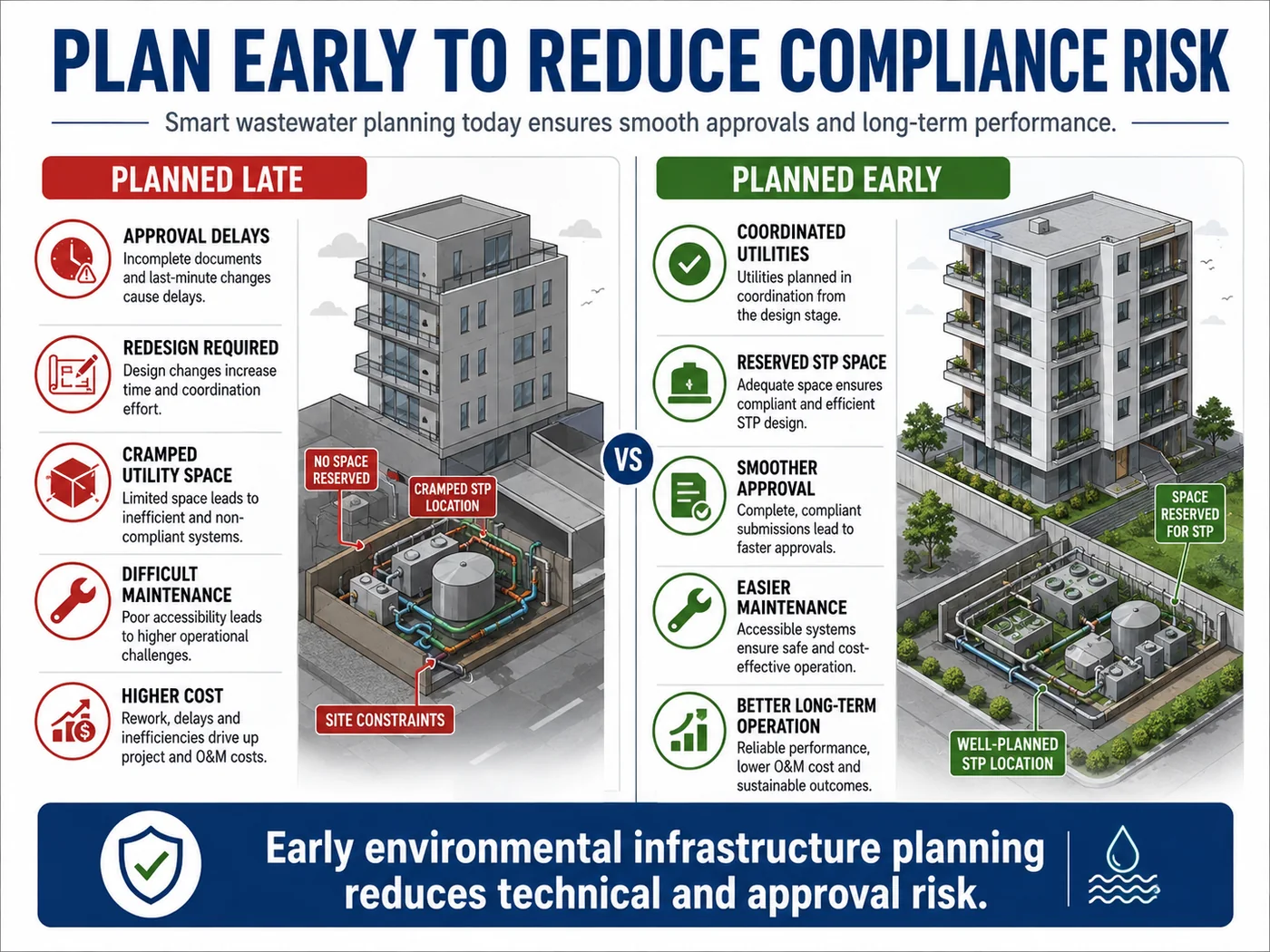
This means developers should not wait until construction is nearly finished to think about STP. Late STP planning can create conflicts with:
- parking;
- basement layout;
- rainwater recharge pits;
- fire exits;
- accessibility routes;
- setbacks;
- tree-planting/open-space requirements;
- MEP rooms;
- drainage and discharge routes.
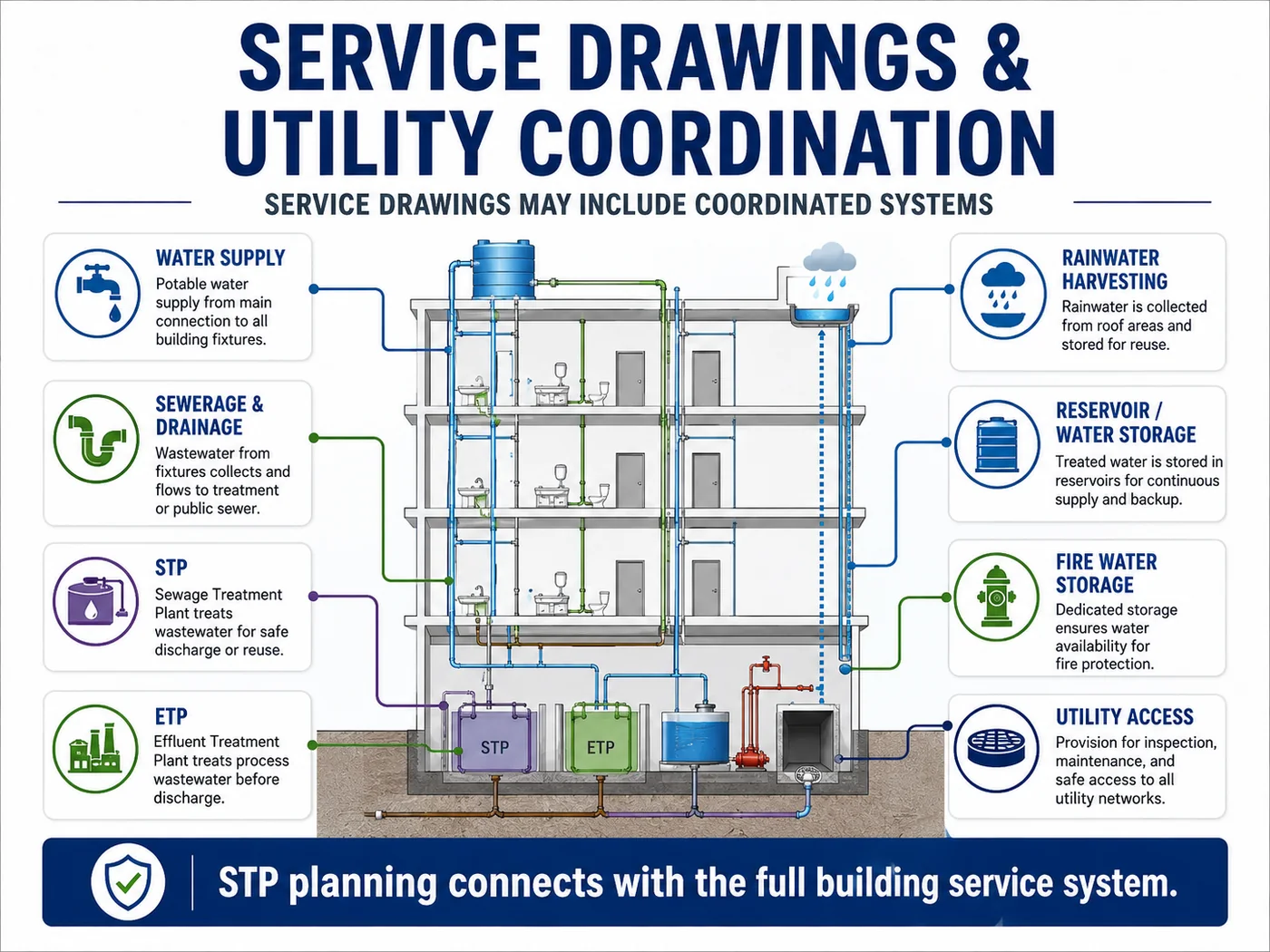
STP, ETP, and WTP: What Is the Difference?
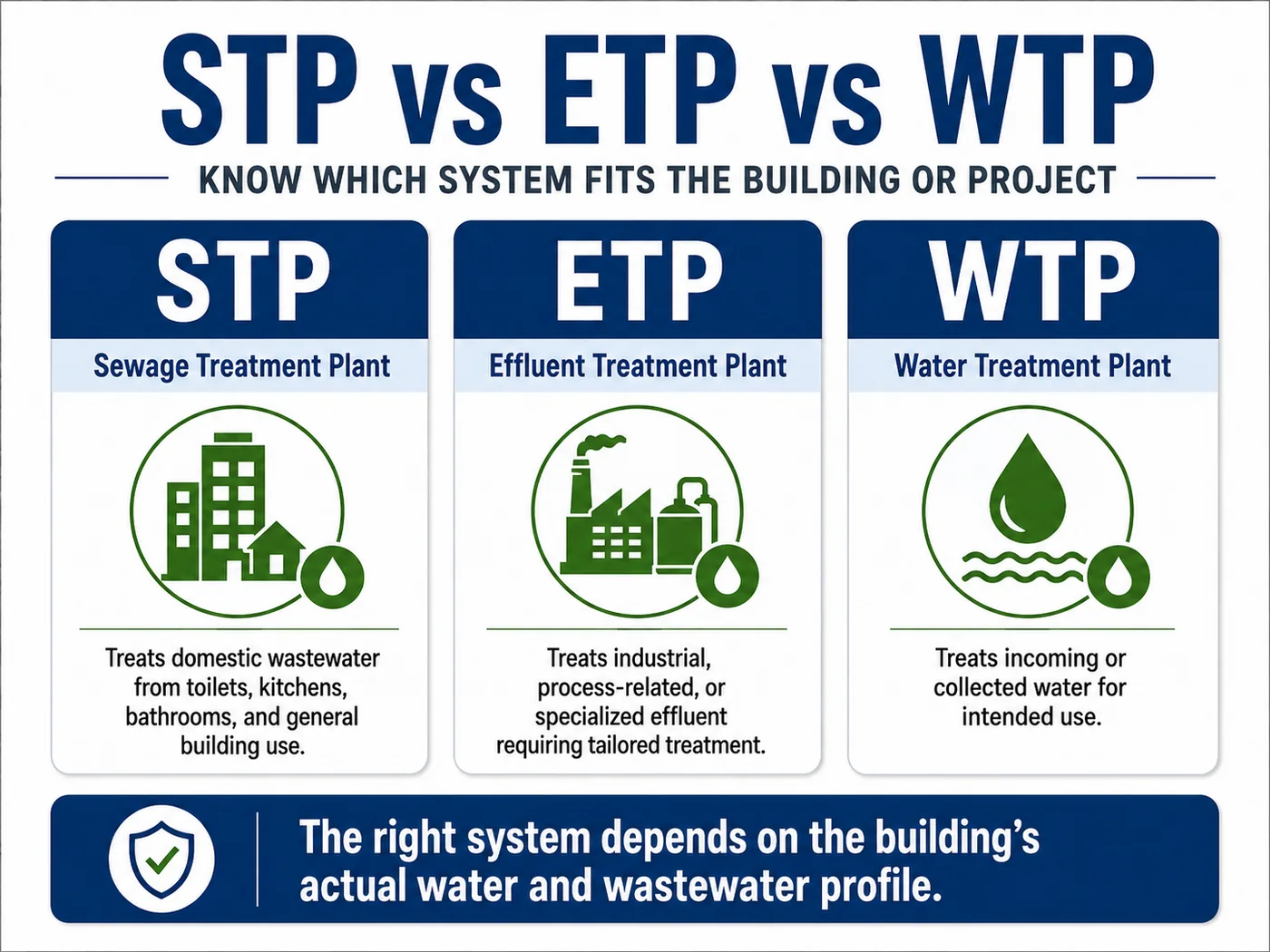
Developers should understand the basic difference between STP, ETP, and WTP.
STP stands for Sewage Treatment Plant. It usually refers to treatment of domestic or sanitary wastewater from toilets, kitchens, bathrooms, washing, and general building use.
ETP stands for Effluent Treatment Plant. It is generally more relevant where wastewater includes industrial, commercial, chemical, process-related, or specialized effluent. The required treatment depends heavily on the type of wastewater.
WTP stands for Water Treatment Plant. It usually refers to treating incoming or collected water to make it suitable for a particular use.
A residential apartment building may mainly need STP planning.
A factory or industrial facility may need ETP planning.
A large institution, resort, commercial site, or mixed-use project may need a more complete water and wastewater strategy involving more than one system.
The important point is not only the name of the plant.
The important point is whether the building’s water and wastewater systems match the actual use of the building.
FAR and STP Service Space
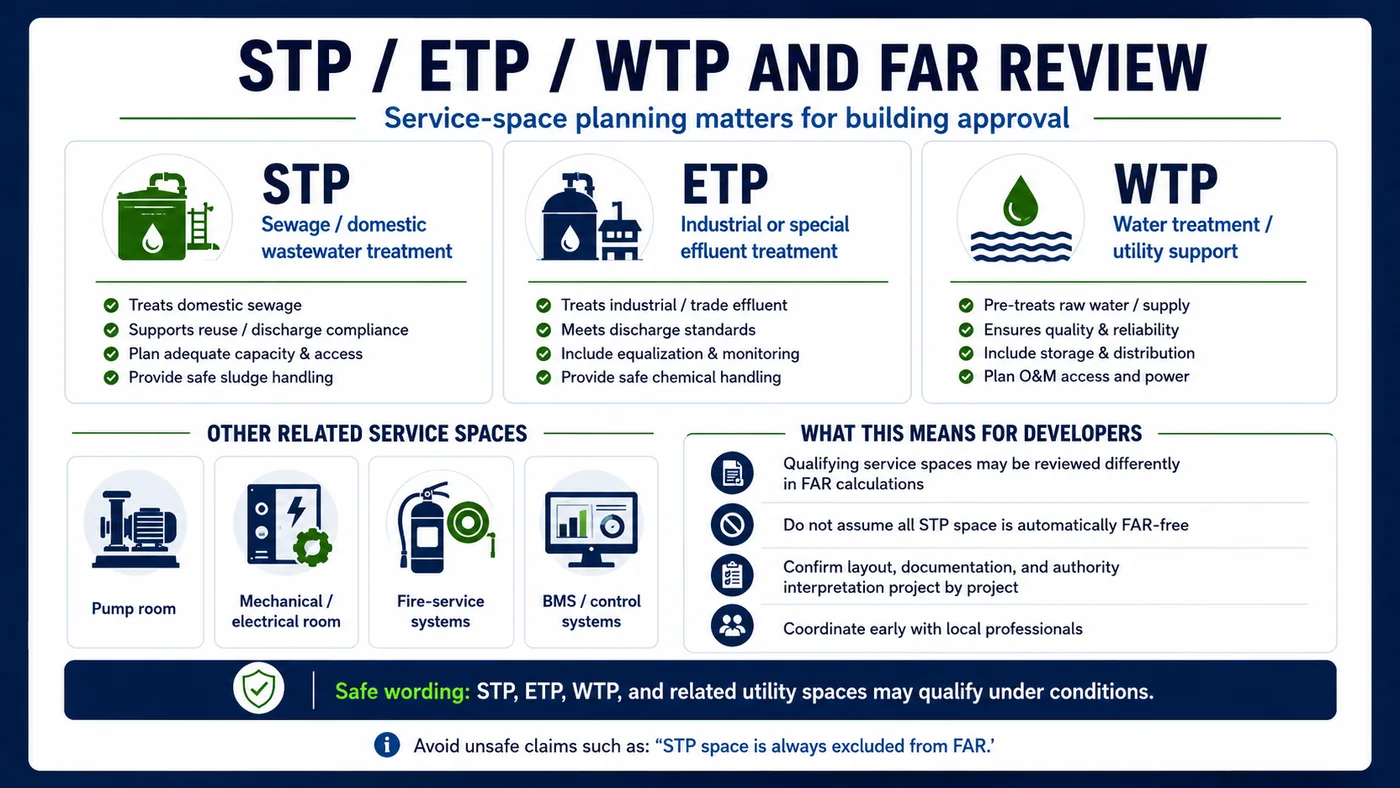
Rule 49 lists STP, ETP, WTP, pump rooms, mechanical/electrical rooms, fire-service systems, BMS and similar service installations among areas that may be excluded from total floor area / FAR calculation under conditions. This can be important for developers, but it must be confirmed project by project through local professionals and the approving authority.
Source: Bangladesh Gazette, Dhaka Metropolitan Building Construction Rules, 2025, p. 10868.
Water Reuse Is Becoming Part of the Bigger Compliance Direction
The 2025 rules also point toward broader water-management thinking.
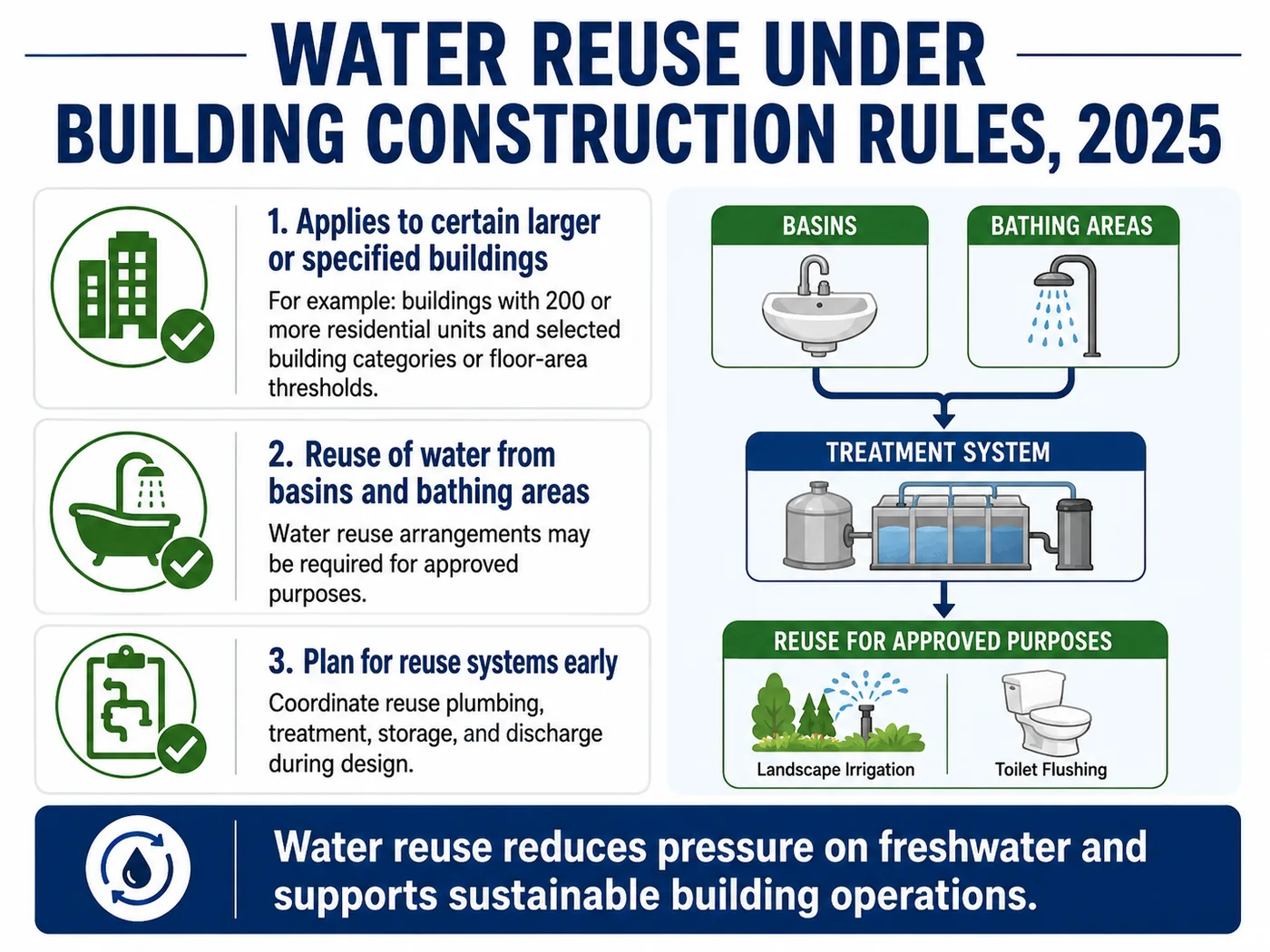
The document includes water-reuse provisions for certain larger or specified buildings. The reviewed text references water-reuse arrangements for buildings with 200 or more residential units and selected building categories or floor-area thresholds. It also refers to reuse of water from sources such as basins and bathing areas.
This matters because wastewater planning is no longer only about disposal.
For some buildings, the future question will be:
Can some treated or recoverable water be reused safely for approved purposes?
That may affect:
- plumbing separation
- greywater collection
- treatment design
- storage
- reuse routing
- maintenance
- user safety
- approval documentation
Developers should not assume water reuse applies to every building. But for larger or specified projects, reuse planning may become part of responsible design.
Rainwater Recharge Is Separate From STP
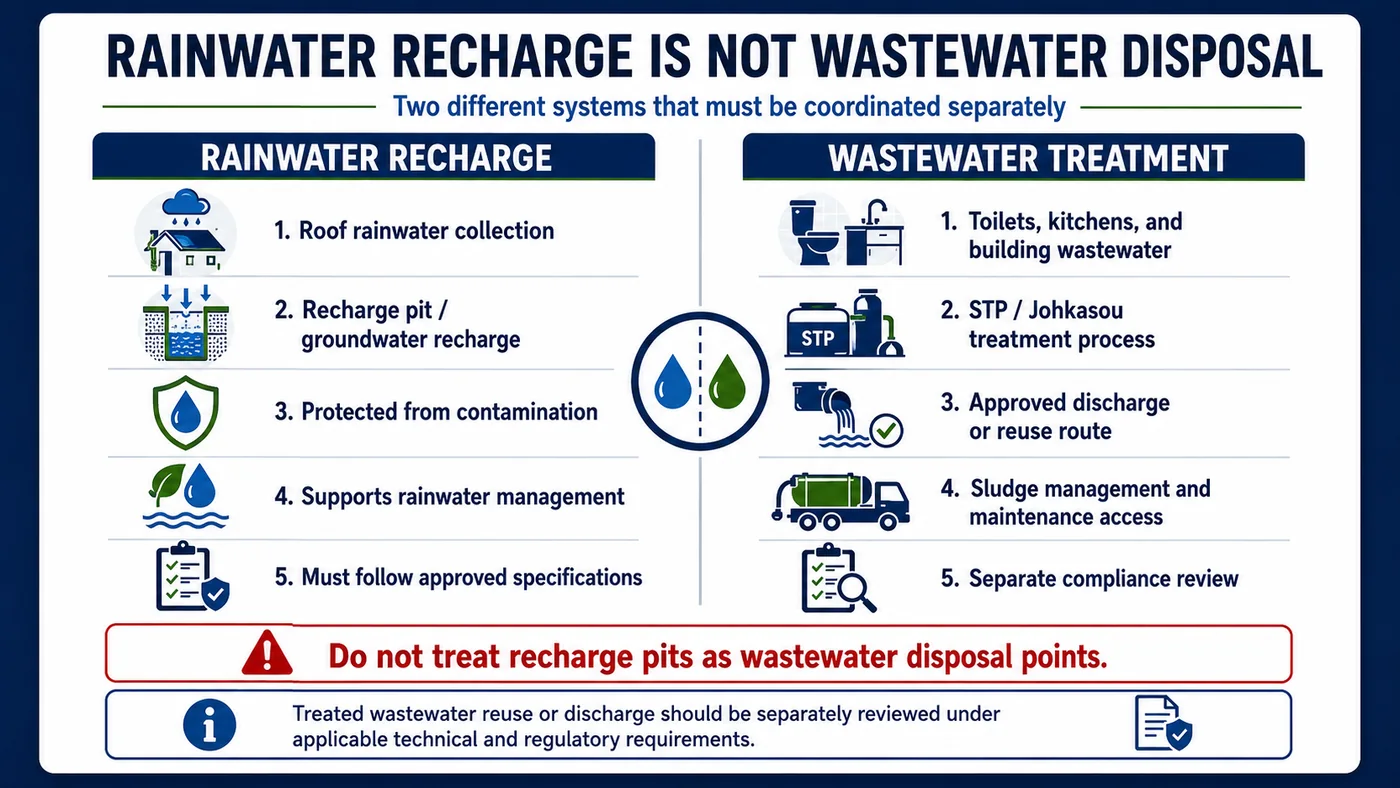
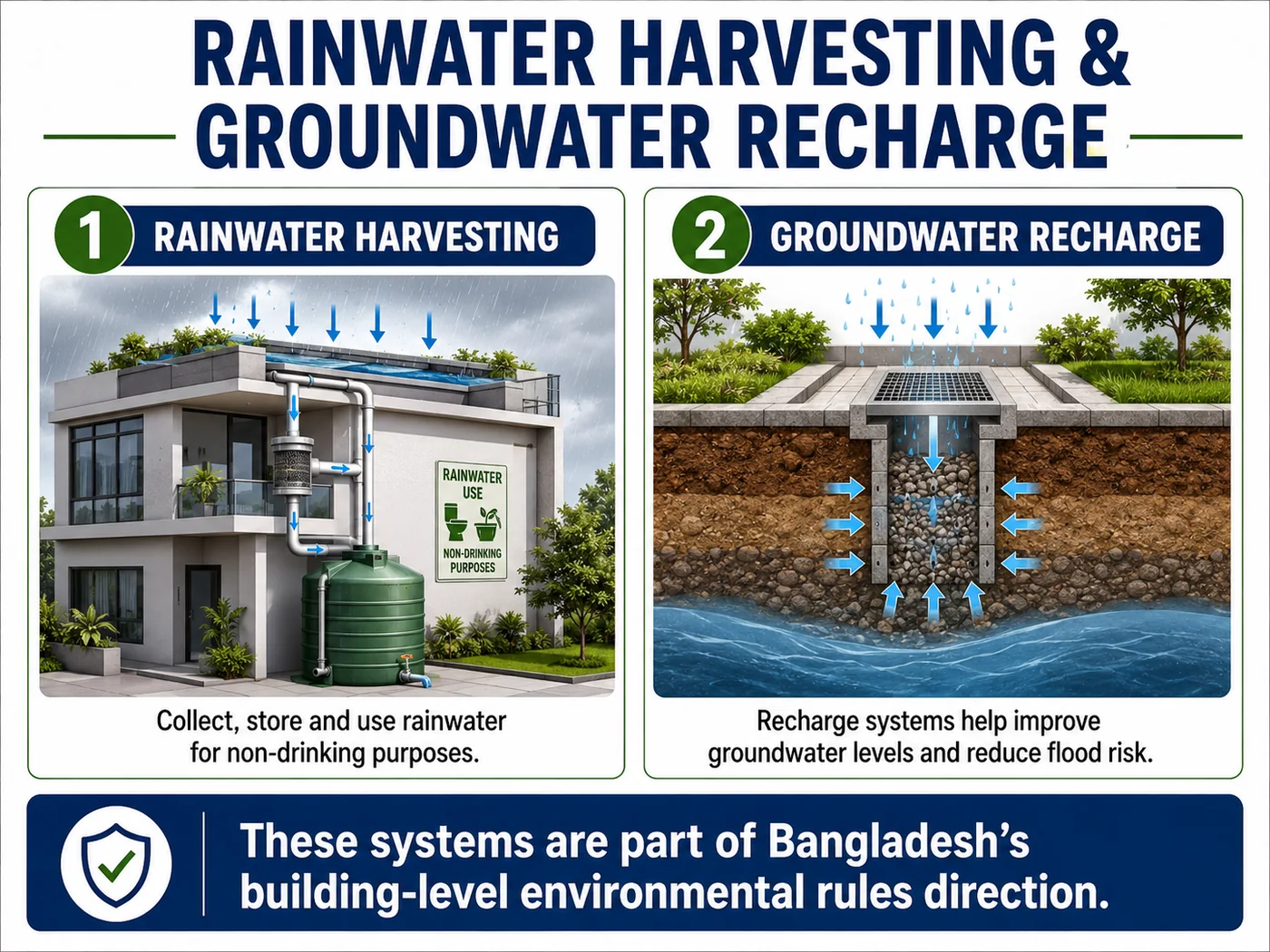
The rules require rainwater harvesting and groundwater recharge systems as part of building planning. Recharge pits must be designed according to the Code or approved specifications, protected from pollution, and not used for water from other sources.
Sources: Bangladesh Gazette, Dhaka Metropolitan Building Construction Rules, 2025, p. 10878–10879.
This means STP/Johkasou planning should not conflict with recharge pits or mandatory rainwater absorption areas.
Rainwater recharge and wastewater treatment should be coordinated, but treated wastewater reuse or recharge requires separate technical and regulatory confirmation.
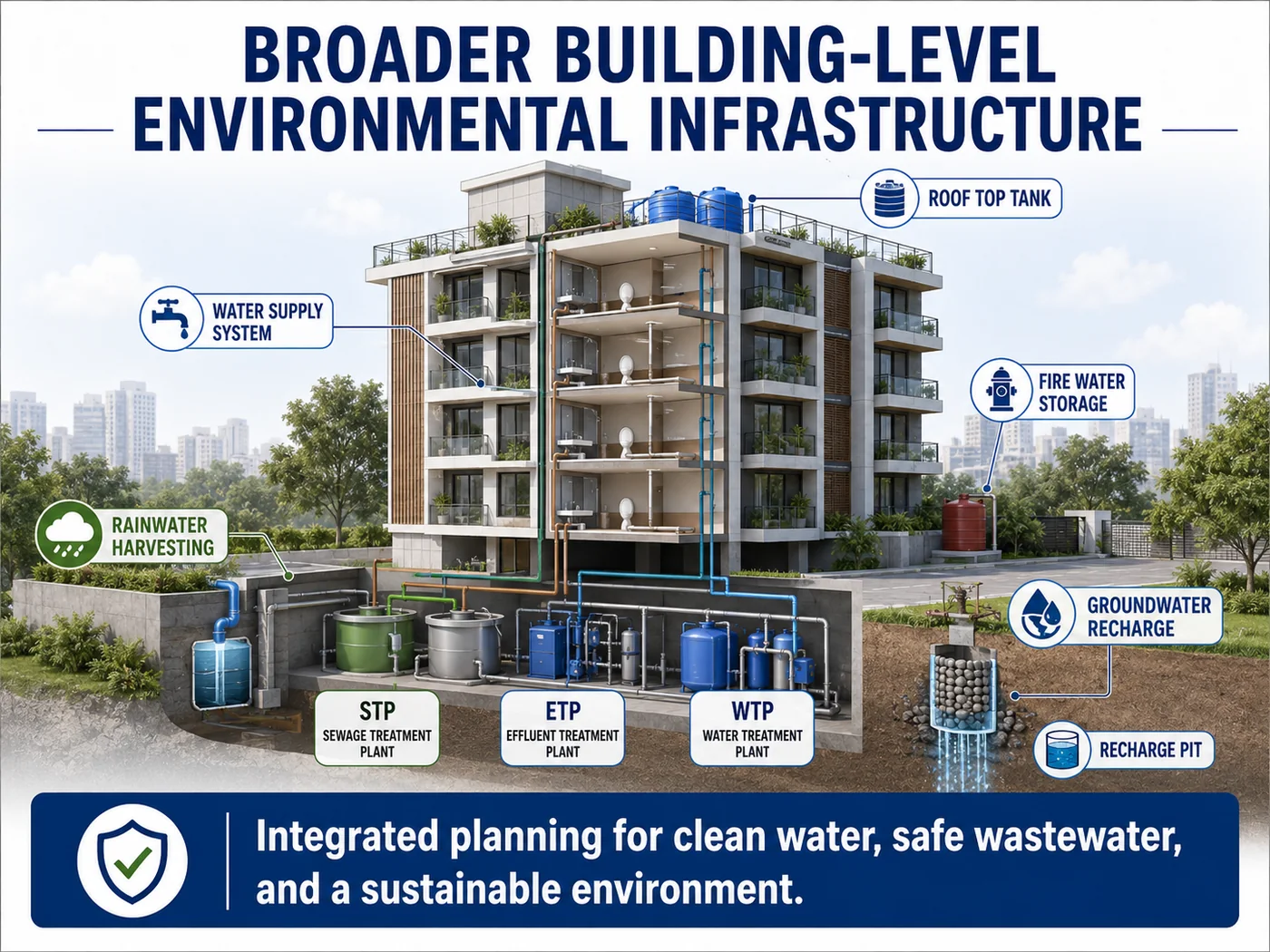
Bangladesh’s building rules are moving toward a more complete environmental infrastructure model, where buildings may need to think about:
- sewage treatment
- effluent treatment
- water reuse
- rainwater harvesting
- groundwater recharge
- drainage
- water storage
- utility systems
- long-term operation
This is a major shift from the older mindset of simply constructing the building first and solving environmental systems later.
Waste Management and Building-Level Environmental Infrastructure
Wastewater is only one part of environmental planning.
A building also creates solid waste, drainage load, runoff, sludge, used water, and long-term maintenance responsibilities.
The rules’ attention to service drawings, water systems, rainwater, recharge, STP, ETP, and other utility systems shows that building compliance is becoming more integrated.
For developers, this means environmental infrastructure should be treated as part of the core project strategy.
It should not be treated as a small technical item hidden at the end of the design checklist.
A modern building needs:
- planned wastewater treatment
- safe drainage
- reliable water storage
- rainwater strategy where applicable
- reuse planning where applicable
- maintenance access
- utility coordination
- clear documentation
- long-term operation responsibility
Buildings that ignore these issues may face approval problems, complaints, maintenance failures, odor problems, environmental concerns, and reputational damage.
Why Basic Septic Tanks May Not Be Enough
A basic septic tank mainly separates solids and liquids.
That is not always the same as proper wastewater treatment.
For small buildings, a basic septic arrangement may still be used depending on local rules and project conditions. But for larger or denser Dhaka/RAJUK-area projects, especially buildings on land of 5 katha or more, developers need to think more carefully.
A weak wastewater setup can fail because of:
- poor sizing
- poor construction
- overloaded usage
- no regular desludging
- leakage
- weak discharge planning
- poor maintenance access
- no monitoring
- no clear operator responsibility
- connection to public drains without proper treatment
This is why the real question is not only:
Does the building have a tank?
The better question is:
Does the building have a functioning wastewater treatment system that can be operated and maintained over time?
Practical Compliance Checklist for Developers
Before finalizing STP planning, developers should confirm:
- plot size in katha;
- whether the project falls within RAJUK jurisdiction;
- Dhaka WASA sewerage network connection status;
- occupancy classification;
- number of units, rooms, users, beds, or seats;
- presence of restaurant, kitchen, laundry, clinic, lab, or industrial wastewater;
- proposed FAR and total floor area;
- basement/service-space availability;
- parking and driveway layout;
- rainwater recharge pit location;
- mandatory open space and tree-planting zones;
- fire exit and accessibility routes;
- proposed STP location;
- treated-water discharge or reuse route;
- sludge/desludging access;
- appointed local architect, engineer, planner, and MEP professionals.
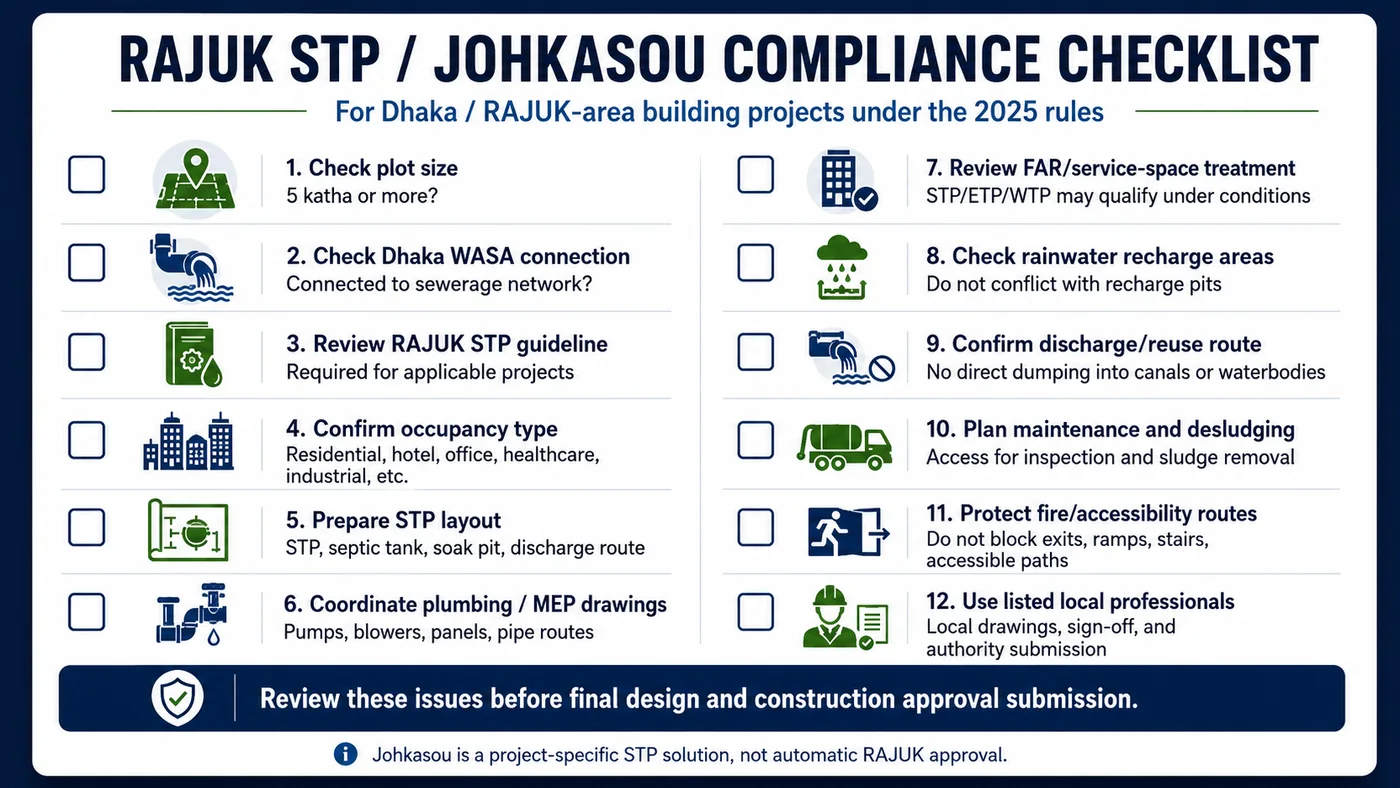
This review should happen during concept planning, not after construction starts. It should also be coordinated with Axton environmental engineering and wastewater treatment services where a Japanese-standard wastewater treatment concept or equipment review is needed.
Where Japanese Johkasou-Style Planning Fits
These rules do not automatically mean every project should use a Japanese Johkasou wastewater treatment system.
But they do make early wastewater planning more important.
A Japanese Johkasou wastewater treatment system may be relevant where compact, decentralized wastewater treatment is suitable for domestic sewage or similar building wastewater streams. Johkasou-style concept planning may also help project teams compare decentralized options before the final equipment and specification are confirmed.
This may include buildings, institutions, communities, peri-urban projects, or sites where centralized sewerage is unavailable, delayed, overloaded, or not suitable for the project. It does not override RAJUK’s STP guideline, Dhaka WASA sewerage-network status, ETP requirements, or authority review.
A Johkasou-style planning approach may support:
- site-level wastewater treatment
- compact treatment planning
- staged improvement where sewerage networks are incomplete
- better maintenance culture
- decentralized wastewater strategy
- institutional and community-level wastewater planning
However, final suitability depends on engineering design, wastewater volume, site conditions, discharge requirements, approval authority review, and long-term maintenance capacity.
Johkasou-style planning should be treated as a serious concept and engineering coordination issue, not as a shortcut around local rules.
Japanese Johkasou wastewater treatment systems for Bangladesh STP projects
How Axton Group LTD Japan Can Help
Axton Group LTD Japan can support early-stage wastewater and environmental infrastructure planning for Bangladesh-focused projects.
Our role is not to claim automatic approval or provide one-size-fits-all answers.
Instead, Axton Group can help project owners think clearly about:
- STP requirement review
- Japanese Johkasou wastewater treatment system equipment review
- treatment media and treatment-process explanation
- Johkasou-style wastewater concept planning before final specification
- decentralized wastewater strategy
- utility-space planning
- coordination with engineers and technical partners
- documentation and proposal support
- wastewater planning for buildings, institutions, and communities
- long-term maintenance and operation planning
Statutory drawings, authority submissions, certifications, and local compliance sign-off should be handled by appointed Bangladesh-listed professionals.
For developers, the best time to discuss wastewater is before the design becomes difficult to change.
That is where early planning can reduce risk.
Compliance Note
This article is for general project-planning information only. It is not legal advice.
Building requirements should be confirmed with the relevant approval authority, qualified engineers, and applicable rules before design submission, construction, purchase, installation, or investment decisions.
The Dhaka Metropolitan Building Construction Rules, 2025 support a confirmed STP planning requirement for Dhaka/RAJUK-area buildings on land of 5 katha or more, with a Dhaka WASA sewerage-network exception. But the rules should not be simplified into a claim that every building in Bangladesh automatically needs a standalone STP.
Conclusion: STP Planning Is Now Part of Serious Building Development
Bangladesh’s construction future cannot be measured only by taller buildings, faster approvals, and higher land values.
The next stage of development also depends on cleaner infrastructure.
The Dhaka Metropolitan Building Construction Rules, 2025 show that wastewater treatment, STP provision, service drawings, water reuse, rainwater systems, groundwater recharge, and utility planning are becoming more important parts of building development.
For Dhaka/RAJUK-area buildings on land of 5 katha or more, STP planning should be considered early during construction approval unless the Dhaka WASA sewerage-network exception applies.
For developers, this changes the mindset.
Wastewater treatment is not just a compliance box.
It is part of responsible design, long-term asset protection, environmental protection, and public health.
The buildings that plan this properly will be easier to defend, easier to operate, and more aligned with Bangladesh’s future infrastructure direction.
Planning a wastewater or STP project in Bangladesh?
Axton Group LTD Japan can support early-stage STP requirement review, Japanese Johkasou wastewater treatment system equipment review, Johkasou-style concept planning, technical coordination, and long-term environmental infrastructure planning.