Introduction: Japanese Johkasou Systems Need Careful Bangladesh STP Positioning
Bangladesh is entering a more serious wastewater compliance era, especially for Dhaka/RAJUK-area building projects affected by the Dhaka Metropolitan Building Construction Rules 2025.
For Axton Group LTD Japan, this creates a practical opportunity to support Bangladesh wastewater treatment projects with Japanese Johkasou wastewater treatment system equipment, treatment media, early concept planning, technical coordination, documentation support, and implementation planning.
But the positioning must be careful.
Johkasou is not named directly in the Dhaka Metropolitan Building Construction Rules, 2025. A Japanese Johkasou wastewater treatment system should not be presented as an automatic RAJUK approval solution, a universal STP substitute, or a replacement for ETP where industrial, chemical, healthcare, laboratory, radiation, or hazardous wastewater is present.
The stronger message is more credible: Japanese Johkasou wastewater treatment systems may support suitable Bangladesh STP projects when the wastewater stream, site context, RAJUK STP guideline, local plumbing/MEP drawings, authority review, maintenance plan, and local professional sign-off are properly coordinated.
For the detailed STP rule background, read the related guide on Bangladesh STP Rules 2025: What Developers Need to Know About Building Wastewater Compliance.
Where Japanese Johkasou Systems Fit in Bangladesh STP Planning
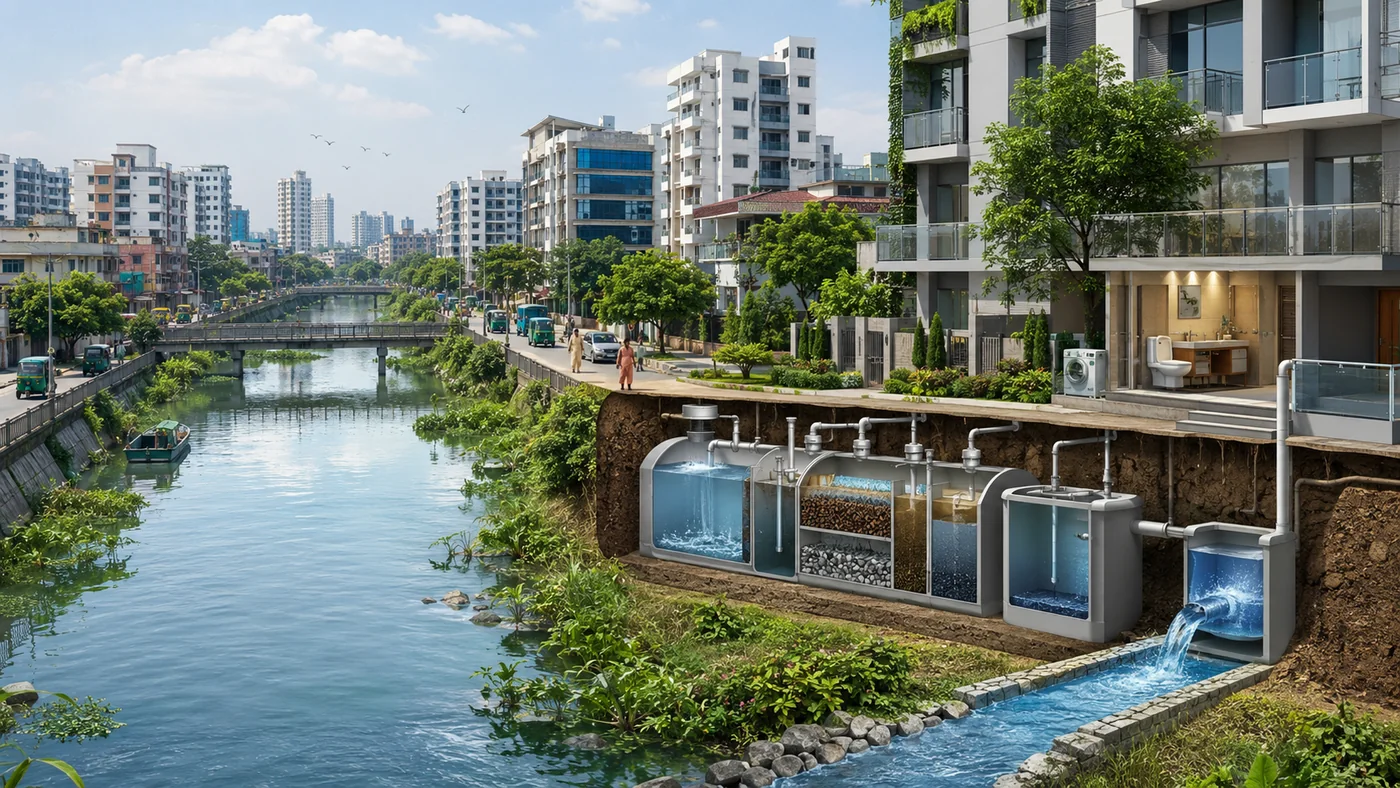
Japanese Johkasou wastewater treatment systems can be considered as a project-specific decentralized STP solution for suitable wastewater streams, especially domestic sewage from residential, hotel, office, institutional, or similar building projects. However, Johkasou is not named directly in the Dhaka Metropolitan Building Construction Rules, 2025. Therefore, any Johkasou proposal must be coordinated with RAJUK’s STP guideline, local plumbing/MEP drawings, listed technical professionals, and authority review.
This is also where Axton environmental engineering and wastewater treatment services can support early review before a project owner commits to a system layout, equipment scope, or implementation plan.
Good Fit, Needs Review, and Not Automatic
| Project Type | Johkasou Positioning |
|---|---|
| Residential apartments | Potentially suitable, subject to flow/load calculation and RAJUK STP guideline |
| Hotels / serviced apartments | Potentially suitable, but laundry/kitchen load must be reviewed |
| Offices | Potentially suitable for domestic sewage |
| Schools / institutions | Possible, but user load and peak use must be checked |
| Restaurants / food service | Needs grease/oil and kitchen wastewater review before design |
| Healthcare / clinics / labs | Needs separate technical and regulatory review |
| Industrial buildings | Do not assume suitability; ETP may be required |
| Chemical / biological / radiation hazard buildings | Johkasou should not be marketed as a default solution |
| Buildings connected to Dhaka WASA sewerage network | STP may not be required under the 2025 rule |
Sources: occupancy classification p. 10914–10915, STP rule p. 10898, hazardous waste caution p. 10891.
Dhaka/RAJUK STP Context That Affects Johkasou Planning
Under the Dhaka Metropolitan Building Construction Rules, 2025, buildings on land of 5 katha or more must make effective STP-related arrangements according to RAJUK’s STP guideline during construction approval. Existing buildings are also required to install STP within the stated timeline, with possible extension by the authority. Buildings connected to the Dhaka WASA sewerage management network are exempt from STP installation under this rule.
Source: Bangladesh Gazette, Dhaka Metropolitan Building Construction Rules, 2025, p. 10898.
This makes Johkasou system Bangladesh discussions more serious, but it does not mean every 5-katha site automatically needs Johkasou. A Japanese Johkasou wastewater treatment system should be considered only after project wastewater profile, flow/load, authority requirements, discharge or reuse route, maintenance access, and local sign-off pathway are understood.
The Problem: Bangladesh’s Urban Growth Has Outpaced Wastewater Infrastructure
Bangladesh’s cities are growing faster than the supporting sanitation infrastructure in many areas.
New apartment buildings, schools, offices, hospitals, factories, commercial complexes, restaurants, and housing communities all generate wastewater every day. That wastewater may include organic waste, suspended solids, pathogens, detergents, oils, grease, nutrients, and other pollutants depending on the source.
When wastewater is not treated properly, it does not disappear.
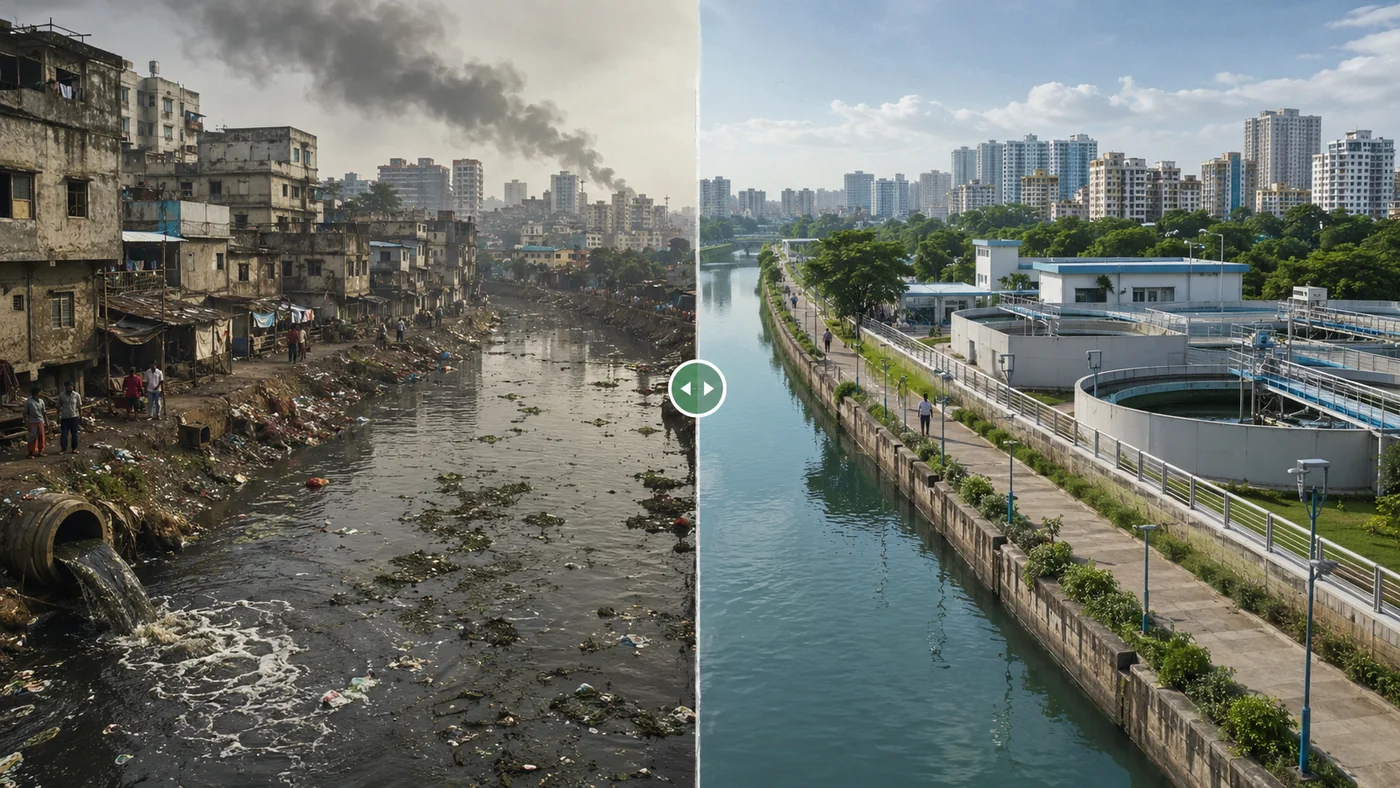
It moves into drains, canals, rivers, ponds, groundwater, low-lying areas, and eventually back into the living environment. Over time, this creates visible and invisible damage:
- polluted canals and rivers
- foul odor around buildings and drains
- blocked or overloaded drainage systems
- unsafe water exposure during flooding
- groundwater contamination risk
- unhealthy neighborhoods
- increased pressure on public health systems
- lower quality of life in dense urban areas
- reduced long-term property and community value
This is why wastewater compliance is not only a technical issue. It is a city planning issue, a public health issue, an environmental issue, and an economic issue.
Planning a wastewater or environmental engineering project?
Axton Group LTD Japan can support early-stage review, Japanese Johkasou-style concept planning, technical coordination, documentation, and implementation planning for wastewater and environmental engineering projects.
Discuss an Environmental ProjectWhy Compliance Is Now Becoming a Serious Business Issue
Wastewater treatment used to be viewed by many property owners as a cost.
That mindset is outdated.
In the new compliance era, wastewater treatment becomes part of project approval, property risk management, environmental responsibility, and long-term asset protection.
For developers and property owners, weak wastewater planning can create several problems:
1. Approval and documentation delays
If building approval processes require clearer wastewater planning, projects that ignore sewage treatment design may face delays, redesigns, additional documentation requests, or compliance objections.
For Dhaka/RAJUK-area buildings on land of 5 katha or more, STP planning can no longer be treated as a last-minute technical detail unless the Dhaka WASA sewerage-network exception clearly applies. The STP location, access, sizing assumptions, plumbing coordination, and implementation plan should be considered during early design. If these issues are ignored until construction has already progressed, the project may face redesign pressure, approval complications, maintenance problems, or inefficient use of building space.
2. Higher future retrofitting costs
Installing a wastewater system after construction is often harder and more expensive than planning it properly from the beginning. Poor early planning can create space problems, pipe layout problems, access problems, and maintenance problems.
3. Environmental penalties and reputational damage
If wastewater discharge causes pollution or violates environmental standards, the problem may become legal, financial, and reputational. A building associated with bad odor, dirty drains, or polluted discharge loses credibility.
4. Poor living and working conditions
Residents, tenants, students, workers, customers, and nearby communities all suffer when wastewater systems fail. Bad sanitation affects comfort, health, and trust.
5. Long-term infrastructure stress
If every building pushes untreated or poorly treated wastewater into public drains, the burden shifts to the city. That creates a collective failure: more pollution, more flooding risk, more complaints, and more expensive future infrastructure repair.
Compliance should not be treated as paperwork. It should be treated as protection.
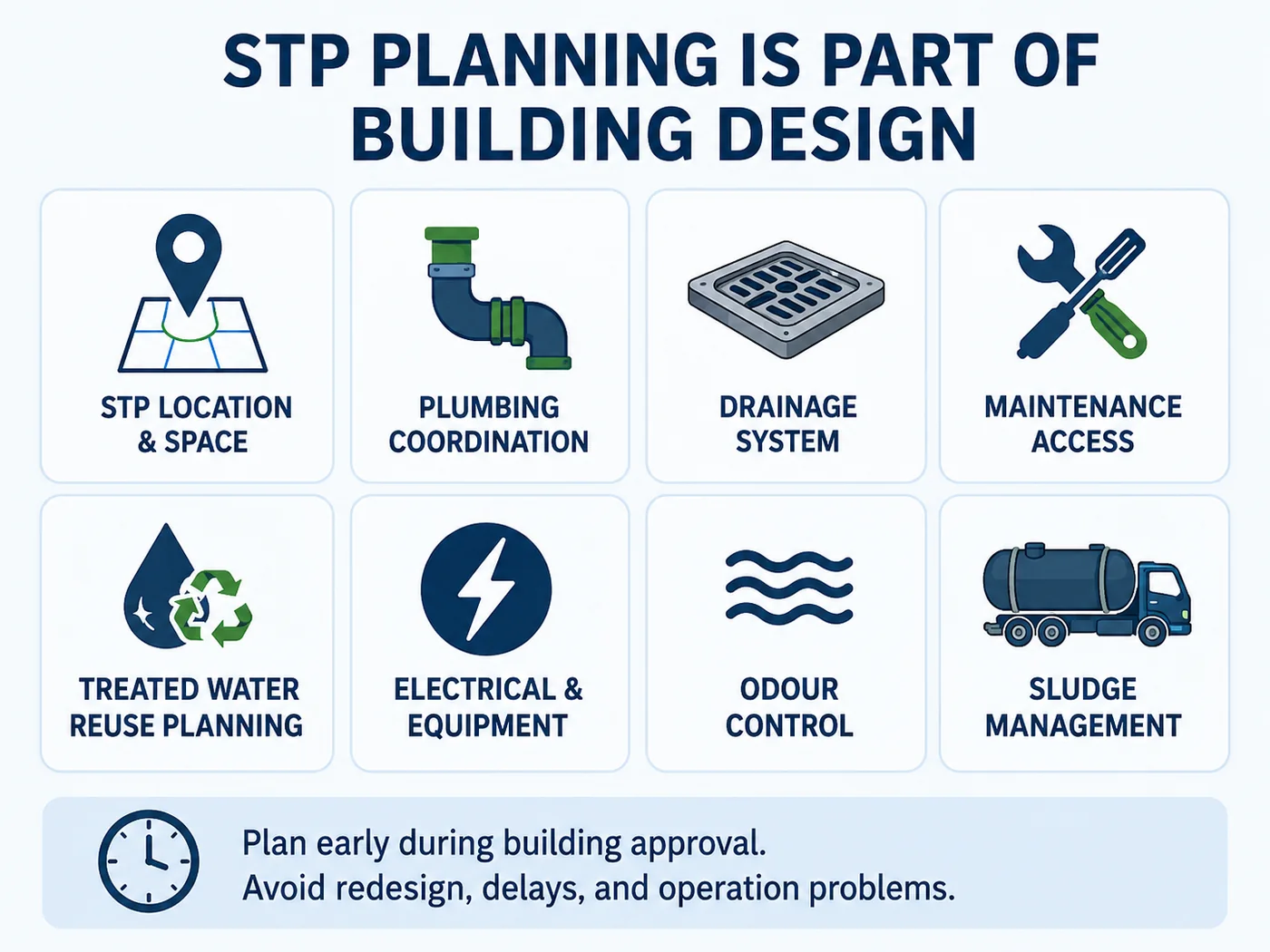
STP planning affects space allocation, plumbing, drainage, service drawings, maintenance access, and possible treated-water reuse planning. For larger projects, environmental infrastructure is now part of development strategy, not just an engineering afterthought.
What Is a Japanese Johkasou Wastewater Treatment System?
A Japanese Johkasou wastewater treatment system is compact, decentralized wastewater treatment equipment inspired by Japan’s approach to local wastewater management.
Unlike a basic septic tank that mainly separates solids and liquids, a Japanese Johkasou wastewater treatment system uses a multi-stage treatment process. Depending on the project design, this may include:
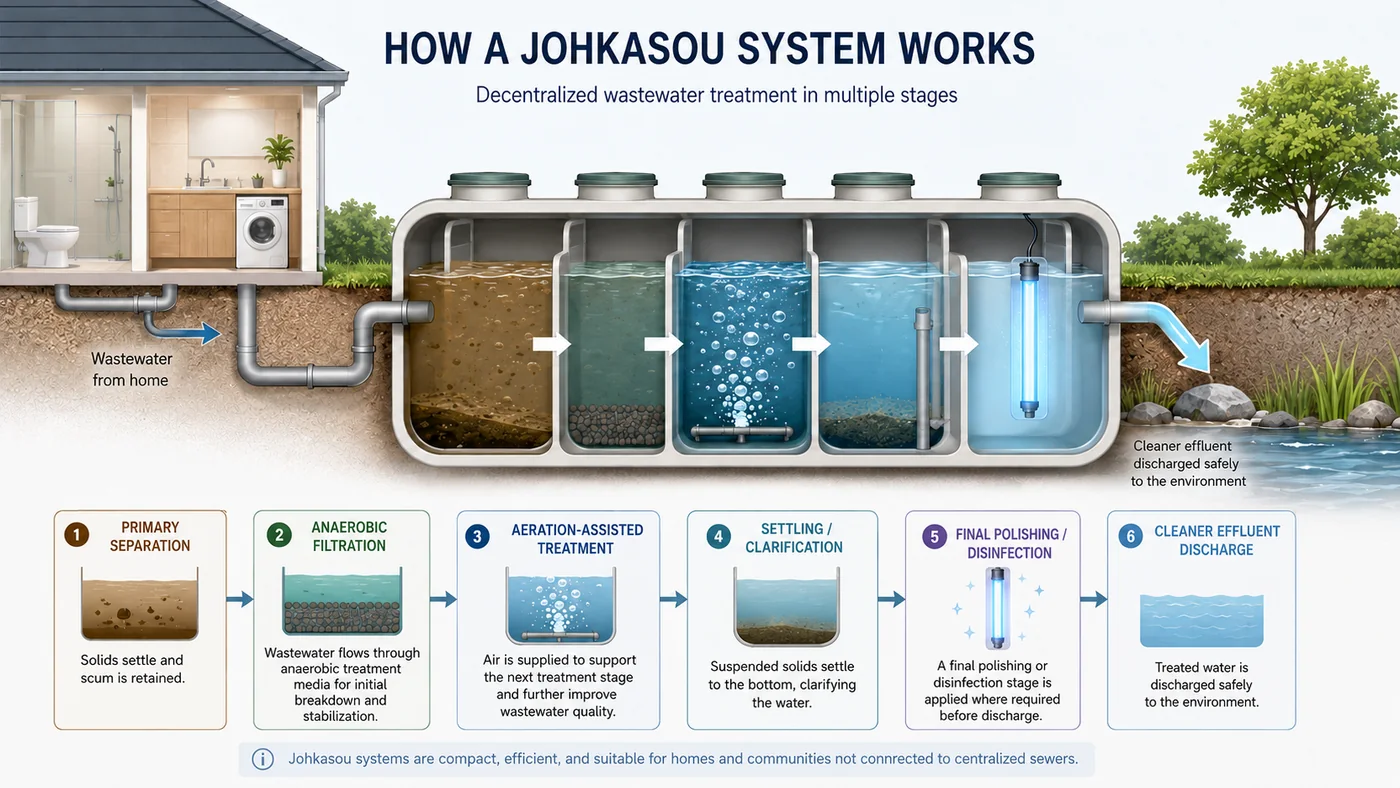
- primary separation
- anaerobic treatment media
- aeration-assisted treatment
- clarification
- final polishing or disinfection
- sludge management
- approved discharge or reuse planning
The goal is simple:
Treat wastewater close to where it is generated, before it becomes a problem for drainage, sewerage capacity, communities, or public infrastructure.
This makes Japanese Johkasou wastewater treatment systems especially relevant for buildings and areas where full centralized sewer connection is unavailable, delayed, overloaded, or not suitable for the site.
Johkasou Is Not a Replacement for ETP
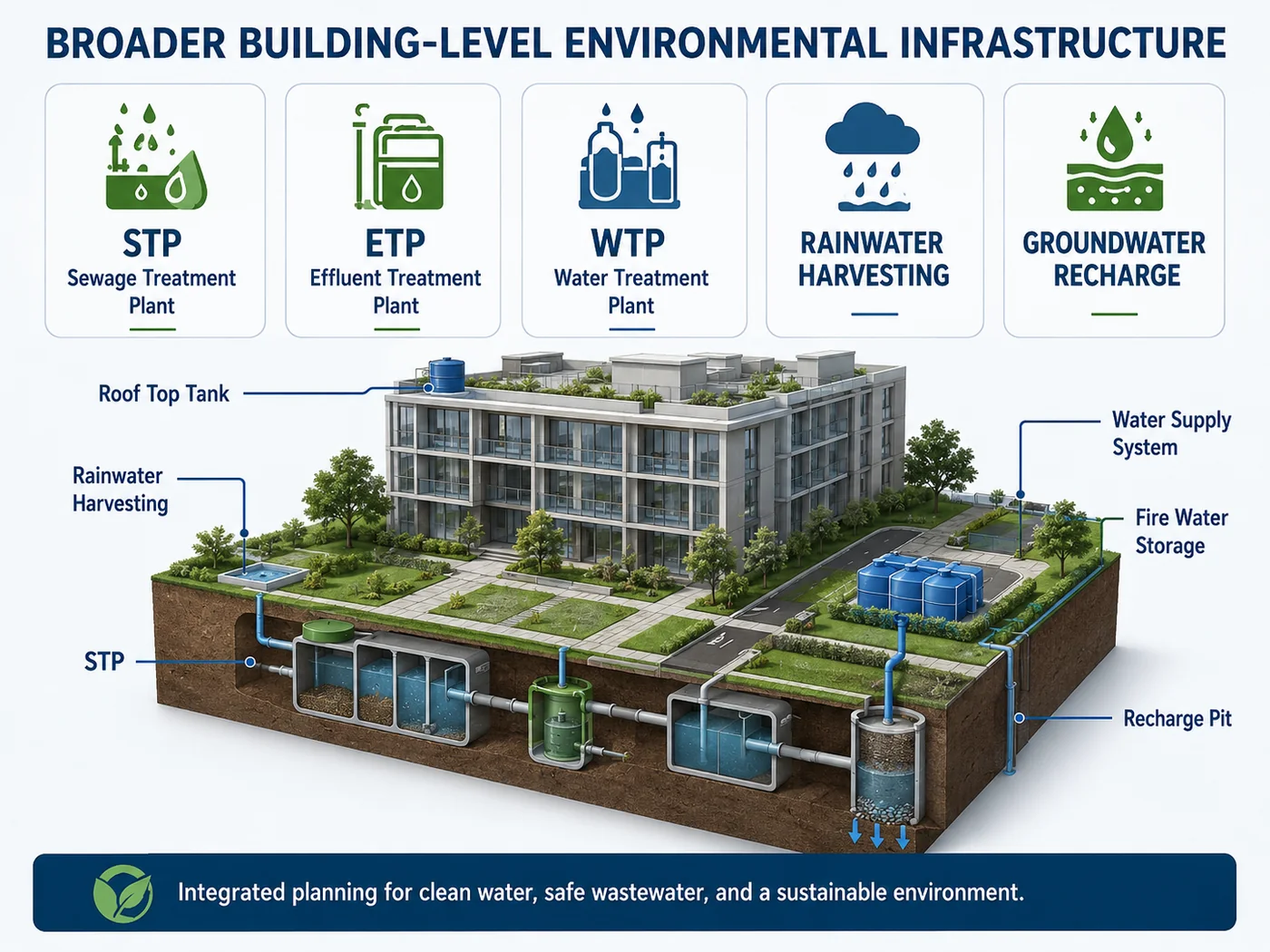
The rules separately recognize STP, ETP, and WTP as building-service systems. Source: Bangladesh Gazette, Dhaka Metropolitan Building Construction Rules, 2025, p. 10868. This distinction matters. STP is generally associated with sewage/domestic wastewater, while ETP is relevant where industrial, chemical, or special effluent is involved.
A Japanese Johkasou wastewater treatment system should not be presented as a default replacement for ETP in industrial, chemical, healthcare, biological, radiation, or hazardous-use projects.
Why Japanese Johkasou Systems Fit Selected Bangladesh Projects
Bangladesh does not need only one type of wastewater infrastructure. That thinking is too narrow.
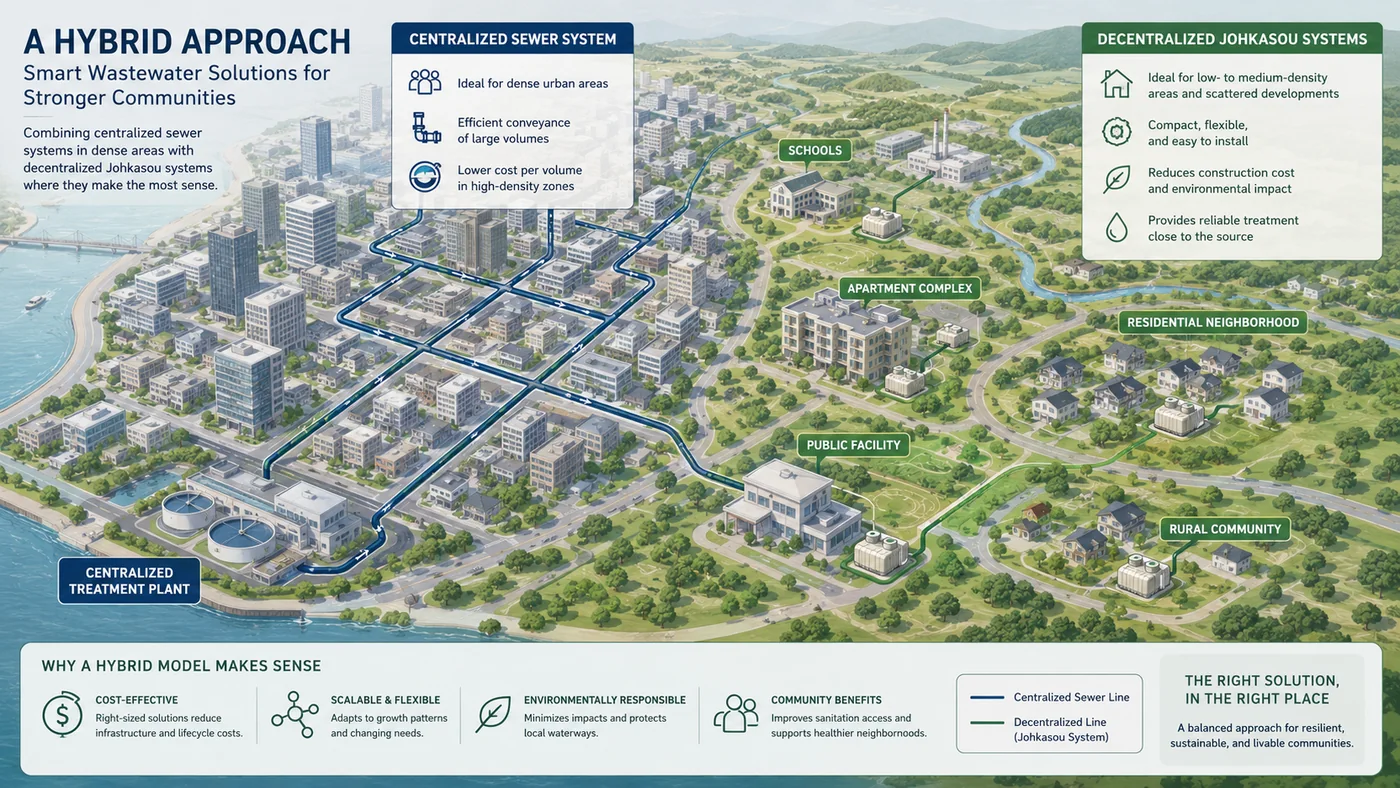
Dense urban cores may need centralized sewer networks and large treatment plants. But many neighborhoods, peri-urban areas, institutions, housing developments, commercial sites, and smaller communities need something more flexible.
Japanese Johkasou wastewater treatment systems can support that flexible model where the wastewater profile, site layout, and authority review make decentralized STP planning suitable.
1. They are decentralized
A decentralized system treats wastewater at or near the building, facility, or community. This reduces dependency on long sewer networks and allows wastewater improvement to happen faster in selected locations.
This matters because centralized sewer expansion takes time, land, capital, engineering capacity, and long-term public coordination.
2. They can be compact
Many Bangladeshi urban plots face space pressure. Developers want to maximize usable space, while regulators and communities need proper wastewater treatment.
A compact treatment system can be easier to integrate into building planning than large, poorly designed conventional systems.
3. They can support phased city improvement
No city can fix all wastewater infrastructure overnight. A decentralized model allows improvement to happen building by building, facility by facility, and community by community.
That creates a practical path:
- new buildings include proper treatment from the beginning
- existing facilities upgrade high-risk systems
- schools, hospitals, and commercial sites reduce local discharge problems
- municipalities create hybrid wastewater strategies
- centralized and decentralized systems work together
4. They help reduce environmental discharge pressure
When wastewater is treated through an approved system before any permitted discharge or reuse route, it can reduce pollution pressure on surrounding drainage and sewer infrastructure. The final discharge or reuse route must still be confirmed through technical design and authority requirements.
5. They create a clearer maintenance model
A good Japanese Johkasou wastewater treatment system is not only equipment. It requires design, installation, inspection, maintenance, desludging, and performance checks.
This creates a more disciplined wastewater management culture. The system must be owned, monitored, and maintained. That is exactly what Bangladesh needs if compliance is going to mean something in practice.
Why Basic Septic Tanks Are No Longer Enough
A basic septic tank may separate solids, grease, and floating scum from wastewater. But separation is not the same as proper treatment.
In many real-world cases, basic tanks fail because of:
- poor sizing
- weak installation
- no regular desludging
- leakage
- overloaded usage
- connection to drains
- no advanced treatment chamber
- no effluent quality monitoring
- no maintenance responsibility
- no proper discharge planning
This is the dangerous part: a septic tank may look like “compliance” on paper while still allowing pollution in practice.
That is why the conversation must move from “Does the building have a tank?” to “Does the building have a functioning wastewater treatment system?”
That distinction matters.
A Japanese Johkasou wastewater treatment system is more aligned with the second question.
Why Centralized Sewerage Alone Is Not Enough
Centralized sewerage is important. Bangladesh needs stronger public sewer networks, proper treatment plants, drainage separation, pumping infrastructure, and long-term citywide planning.
But centralized systems alone cannot solve every wastewater problem quickly enough.
They can be difficult in areas where:
- sewer networks are not yet available
- population growth is faster than infrastructure expansion
- road cutting and pipe installation are difficult
- land is limited
- drainage and sewage systems are mixed or poorly separated
- treatment plants exist but connection networks are incomplete
- developments are scattered or peri-urban
- communities need a faster local solution
The realistic answer is not centralized versus decentralized.
The realistic answer is hybrid wastewater planning.
Large cities need major treatment plants and sewer networks. But individual buildings, housing communities, schools, hospitals, factories, resorts, commercial sites, and developing areas may also need decentralized treatment systems.
Japanese Johkasou wastewater treatment systems can become part of that hybrid model where domestic wastewater treatment, maintenance access, and authority review support that approach.
Why STP Planning Is Now Part of Building Design, Not Only Environmental Awareness
The new compliance direction matters because STP planning affects the building itself.
A wastewater system requires space. It requires pipe connections. It requires maintenance access. It may affect basement planning, ground-floor utility zones, service yards, drainage routes, equipment placement, inspection access, odor control, sludge removal, and long-term operation.
This is why early planning matters.
For Dhaka/RAJUK-area buildings on land of 5 katha or more, the STP question should not be asked only after the architectural drawings are almost finished. It should be discussed during the concept and approval stage unless the Dhaka WASA sewerage-network exception clearly applies.
Project teams should ask:
- Does the project meet the STP threshold?
- Where will the STP be located?
- Is there an approved sewerage network connection?
- What wastewater volume will the building generate?
- How will the system connect to plumbing and drainage?
- Will treated water be reused for any approved purpose?
- How will maintenance and inspection access be handled?
- What documentation will the approval authority require?
- Who will be responsible for long-term operation?
This is where Japanese Johkasou-style concept planning can help. Axton Group LTD Japan can support early-stage review, concept development, technical coordination, and implementation planning so that wastewater treatment is considered before the project reaches a difficult or expensive redesign stage.
STP, ETP, WTP, and Utility-Space Planning
The rules also point toward a wider building-utility planning direction.
STP is not the only system developers need to consider. Depending on the project, service and utility planning may also involve ETP, WTP, substations, generators, transformers, meter rooms, BMS systems, air-conditioning plants, underground tanks, rooftop tanks, firefighting water storage, and related utility spaces.
The document appears to give specific treatment to certain utility or service spaces in FAR calculation under defined conditions. This should not be oversimplified as “STP space is always excluded from FAR.” Instead, project teams should verify how STP, ETP, WTP, and related utility spaces are treated for each project before finalizing design.
The important lesson is that wastewater and utility systems are not minor back-of-house details. They are now part of serious development planning.
Water Reuse, Rainwater Harvesting, and Groundwater Recharge
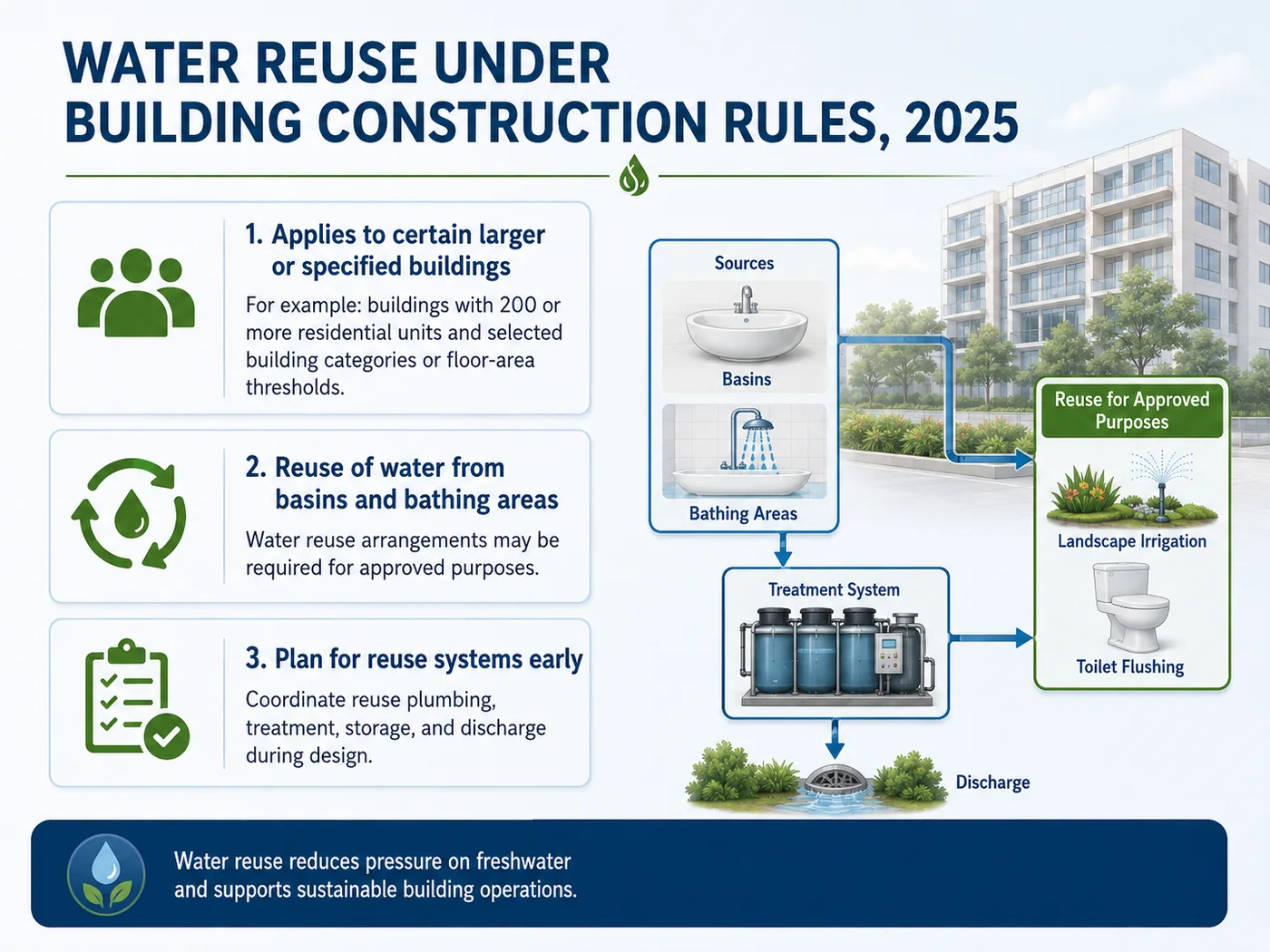
The 2025 rules also point toward broader water-management thinking.
The document includes water-reuse provisions for certain larger or specified buildings, including references to reuse arrangements for buildings with 200 or more residential units and selected building categories or floor-area thresholds. It also refers to the reuse of water from basins and bathing areas.
The rules also include rainwater harvesting and groundwater recharge provisions.
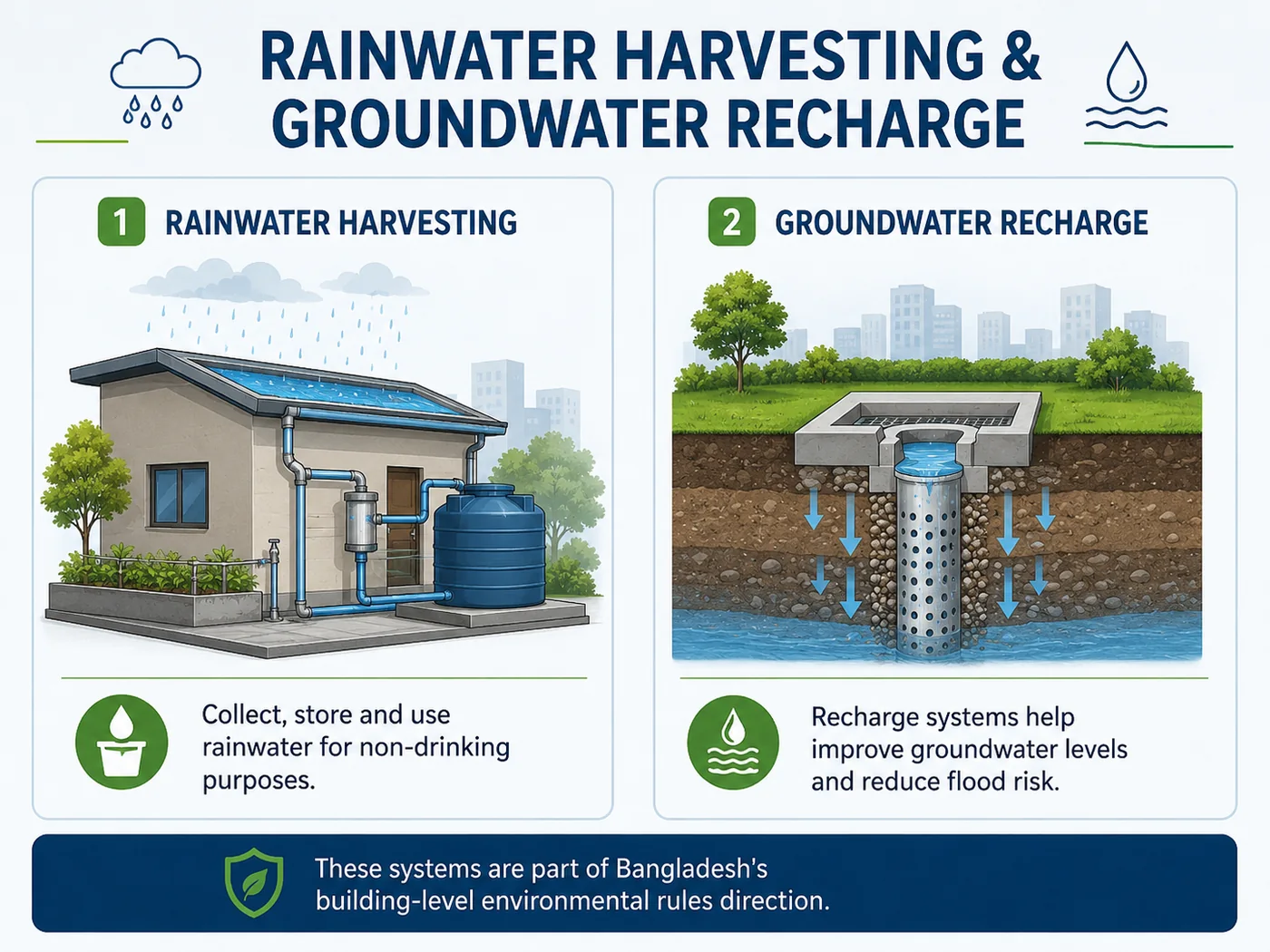
These are not the main focus of a Japanese Johkasou wastewater treatment system proposal, but they are important because they show the direction of building regulation: future-ready buildings will need to think about wastewater treatment, water reuse, rainwater systems, drainage, groundwater recharge, and long-term operation together.
For developers, this means the question is no longer only:
“Where does the wastewater go?”
The better question is:
“How should the building manage water, wastewater, treatment, reuse, discharge, and environmental responsibility as one connected system?”
Where Japanese Johkasou Systems Can Be Useful in Bangladesh
Japanese Johkasou wastewater treatment systems may be useful for many types of projects, depending on local regulations, site conditions, wastewater volume, discharge requirements, maintenance capacity, and engineering design.
Japanese Johkasou wastewater treatment systems may be especially relevant for:
- Dhaka/RAJUK-area apartment projects on land of 5 katha or more where STP applies and no Dhaka WASA sewerage-network exception is confirmed
- residential projects requiring decentralized domestic wastewater treatment
- schools and educational facilities
- hospitals and clinics
- commercial buildings
- hotels and resorts
- institutions with predictable wastewater loads
- peri-urban developments
- communities without reliable sewerage connection
- municipalities considering decentralized wastewater strategies
Final suitability depends on wastewater volume, site layout, discharge requirements, maintenance capacity, sewerage-network availability, authority approval, and engineering design.
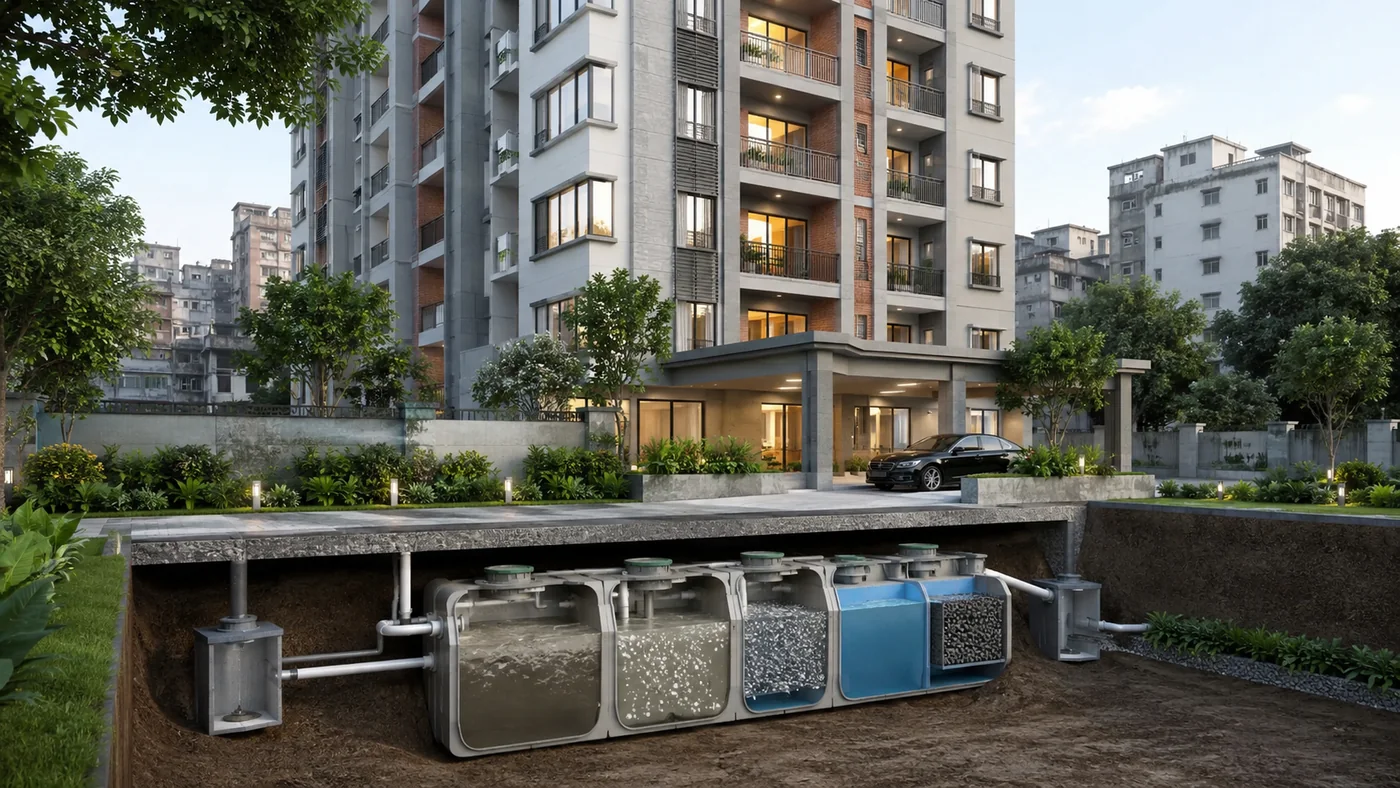
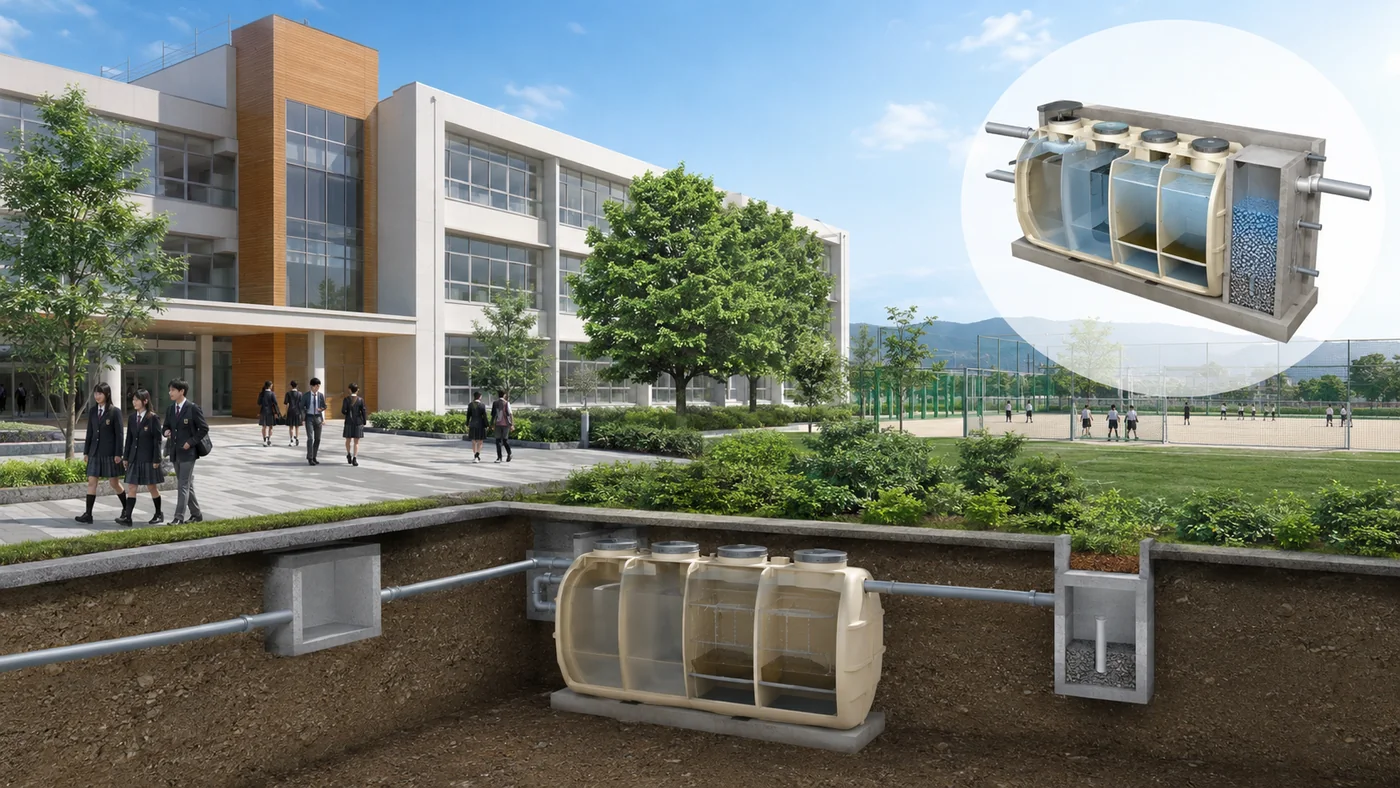
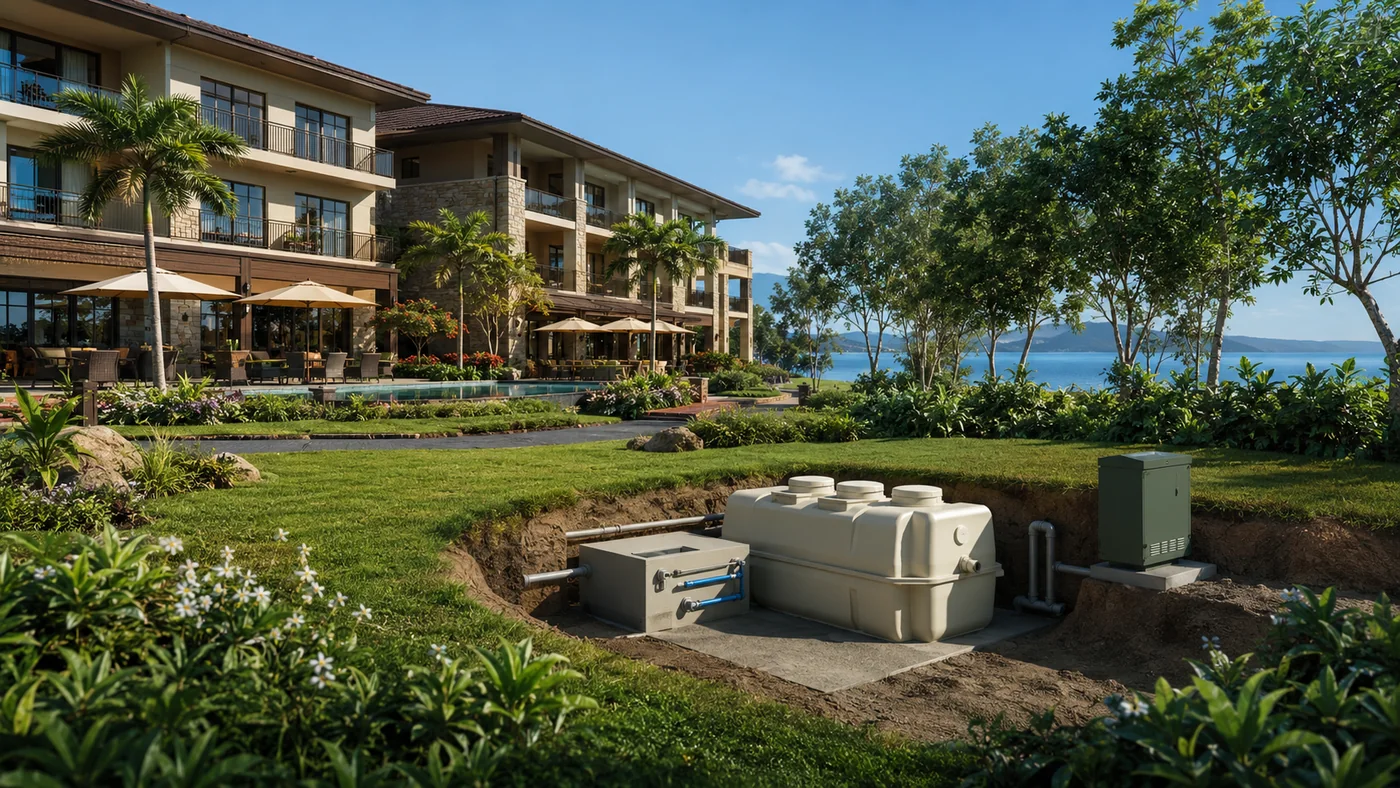
Residential apartment buildings
Multi-family buildings generate daily wastewater from toilets, kitchens, bathrooms, laundry, and cleaning. A properly planned treatment system can help reduce local discharge pressure and improve environmental hygiene.
Housing communities
A cluster of homes or a residential community may use a decentralized or semi-decentralized treatment model where full sewer connection is not available or not yet reliable.
Schools and universities
Educational institutions have predictable daily wastewater loads and strong public health responsibilities. Proper wastewater treatment supports cleaner campuses and safer surroundings.
Hospitals and clinics
Healthcare facilities need especially careful wastewater planning due to hygiene expectations and potential contamination risks. System design must be handled with professional engineering and regulatory review.
Commercial buildings and shopping complexes
Commercial properties need reliable wastewater systems to avoid odor, drainage problems, tenant complaints, and compliance issues.
Hotels and resorts
Hospitality projects depend heavily on cleanliness, comfort, and environmental reputation. Wastewater failure can damage both customer experience and brand trust.
Industrial and mixed-use facilities
Some industrial sites require specialized wastewater treatment depending on the nature of the effluent. Japanese Johkasou wastewater treatment systems are mainly relevant to domestic or sanitary wastewater streams, and should not be treated as a default replacement for ETP.
Rural and peri-urban developments
In areas where centralized sewer expansion is slow or unlikely, decentralized treatment can provide a practical route to cleaner wastewater management.
The Environmental Benefits
The strongest argument for Japanese Johkasou wastewater treatment systems is environmental protection when the project is technically suitable and approved.
When wastewater is treated properly and routed according to applicable rules, communities can reduce pollution pressure on local drainage and sewer infrastructure. Over time, this can support:
- lower pollution pressure on urban drainage networks
- reduced odor
- better groundwater protection
- lower visible pollution
- healthier aquatic ecosystems
- reduced stress on public drains
- cleaner surroundings for homes and institutions
- improved public confidence in new developments
This does not happen automatically. It requires correct sizing, proper installation, trained maintenance, sludge management, inspection, and responsible operation.
But if implemented seriously, decentralized wastewater treatment can help Bangladesh move away from the habit of treating wastewater as a late-stage building problem.
The Public Health Benefits
Wastewater treatment is public health protection.
Poor sanitation and untreated wastewater can expose communities to pathogens and contaminated water. During flooding or drainage overflow, the risk becomes even more visible because wastewater can mix with roads, homes, markets, and public spaces.
Better wastewater systems can help reduce:
- human exposure to contaminated water
- pathogen spread from sewage
- foul odor and unhygienic surroundings
- unsafe drains near homes and schools
- contamination risk near wells or sensitive sites
- disease pressure in dense communities
A clean city is not built only with roads, buildings, lights, and landscaping. It is built with invisible infrastructure that protects people every day.
Wastewater treatment is one of those invisible systems.
The Economic Case: Compliance Costs Less Than Failure
Some developers may see wastewater treatment as an added cost.
That is short-term thinking.
Poor STP planning can create approval delays, redesign costs, inefficient utility-space layout, maintenance-access problems, tenant complaints, odor issues, and long-term operation failures. Good planning protects both compliance and asset value.
The long-term cost of poor wastewater planning can be much higher:
- delayed approvals
- redesign work
- tenant complaints
- legal and regulatory issues
- bad odor problems
- waterlogging complaints
- higher maintenance costs
- emergency repair work
- loss of reputation
- lower property attractiveness
A properly planned system protects the asset.
It also makes the project easier to defend to regulators, buyers, tenants, institutions, and communities. In a market where compliance expectations are rising, buildings with responsible wastewater systems may become more attractive than buildings that treat sewage as an afterthought.
What Bangladesh Can Look Like Over Time With Better Wastewater Treatment
If Bangladesh takes this new wastewater compliance era seriously, the impact can be significant.
In the early stage, the change may begin with new buildings, larger plots, schools, commercial properties, institutions, and high-risk facilities. More projects will need proper wastewater design before approval.
In the next stage, developers and engineers may start planning wastewater treatment earlier in the design process. Instead of adding a tank at the end, they will consider system size, location, access, maintenance, discharge, and compliance from the beginning.
Over time, this can create cleaner neighborhoods, less pressure on drains, reduced discharge into canals, better maintenance habits, and more professional wastewater service providers.
At the city level, a hybrid model can emerge:
- centralized sewerage for dense urban networks
- Japanese Johkasou wastewater treatment systems for suitable buildings and communities outside reliable sewer coverage
- upgraded treatment for institutions and commercial sites
- clearer inspection and maintenance culture
- stronger environmental compliance documentation
The result is not only cleaner water.
The result is stronger urban discipline.
What Axton Can Provide
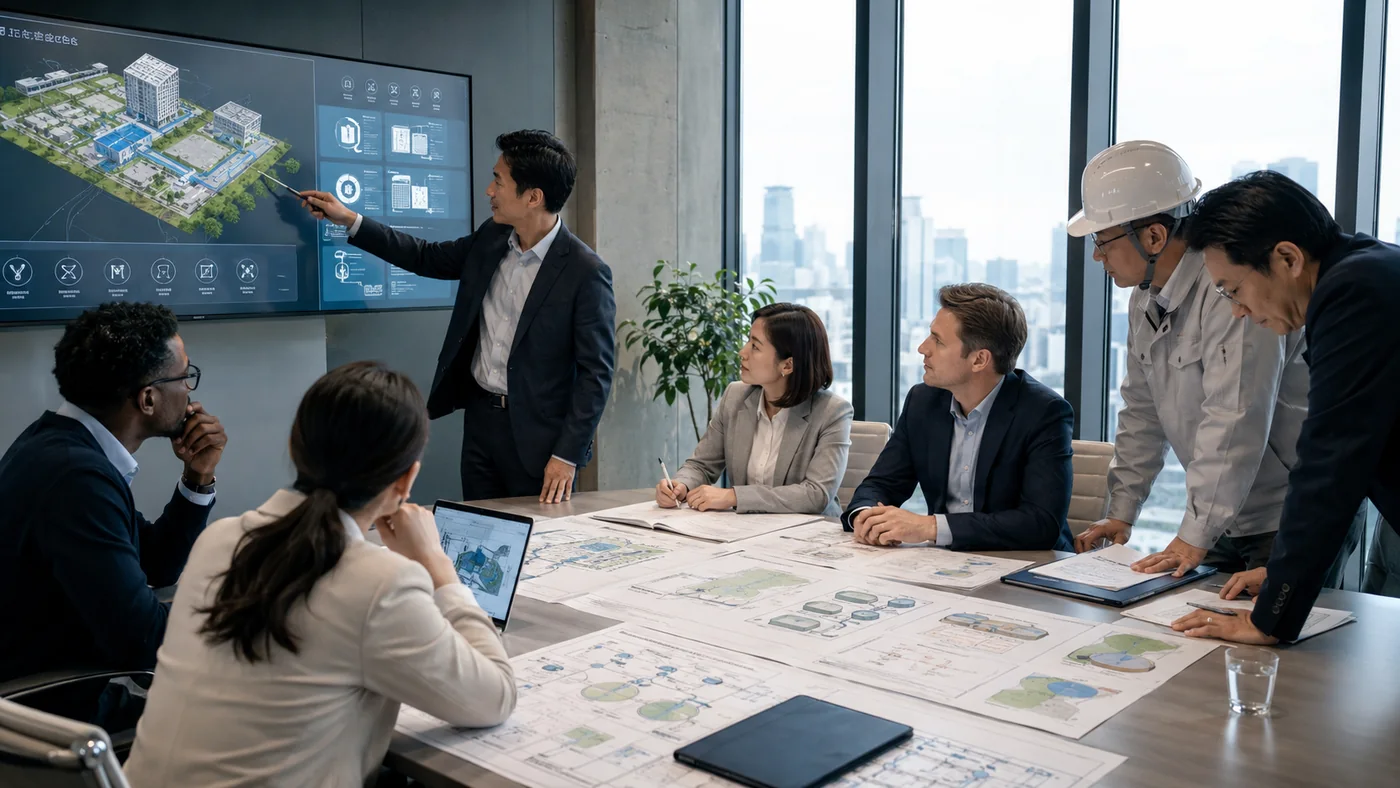
Axton Group LTD Japan can support Bangladesh projects with:
- Japanese Johkasou wastewater treatment system equipment;
- early STP/Johkasou-style concept planning;
- design-basis coordination;
- treatment process explanation;
- equipment layout inputs;
- capacity and user-load discussion;
- MEP/plumbing coordination support;
- maintenance and desludging planning;
- documentation support for local professionals;
- implementation coordination with developers, consultants, and contractors.
Statutory drawings, authority submissions, certifications, and local compliance sign-off should be handled by appointed Bangladesh-listed professionals.
Sources: Bangladesh Gazette, Dhaka Metropolitan Building Construction Rules, 2025, p. 10846 and p. 10849.
Information Needed Before Recommending Johkasou
Before recommending a Japanese Johkasou wastewater treatment system, Axton should confirm:
- plot size in katha;
- whether the project is inside RAJUK jurisdiction;
- Dhaka WASA sewerage network connection status;
- occupancy category;
- number of units, rooms, users, or beds;
- kitchen/restaurant/laundry load;
- healthcare/lab/industrial wastewater presence;
- approved FAR and floor area;
- STP guideline requirement;
- basement/service-space availability;
- rainwater recharge pit location;
- parking and maintenance access;
- discharge route;
- sludge/desludging access;
- local professional team.
Discharge and Reuse Caution
The project must define the treated-water discharge or reuse route before final design. The 2025 rules prohibit direct waste discharge into waterbodies, canals, rivers, and similar areas. Rainwater recharge pits should not be treated as wastewater discharge points.
Any proposed reuse of treated water must be reviewed separately against applicable technical standards, authority requirements, and environmental rules.
Sources: Bangladesh Gazette, Dhaka Metropolitan Building Construction Rules, 2025, p. 10878, p. 10891, and p. 10898.
Conclusion: Johkasou Can Support the Right Bangladesh STP Projects
Bangladesh does not only need more buildings. It needs cleaner, better-planned infrastructure.
The Dhaka Metropolitan Building Construction Rules 2025 make STP planning a serious building-approval issue for Dhaka/RAJUK-area projects on land of 5 katha or more, while also recognizing the Dhaka WASA sewerage-network exception.
Japanese Johkasou wastewater treatment systems can support this direction where compact, decentralized treatment is suitable for domestic sewage or similar building wastewater streams. They are not automatic RAJUK approval, they do not replace local professionals, and they should not be marketed as a default ETP replacement.
The credible path is project-specific: confirm the rule context, wastewater profile, authority requirements, drawings, service-space constraints, discharge/reuse route, maintenance plan, and implementation team before selecting equipment.
Explore Japanese-standard wastewater planning with Axton Group
Share your site, building, community, or city-level wastewater challenge. Axton Group can review the project context and help plan the right next step.
Request a Free Assessment